
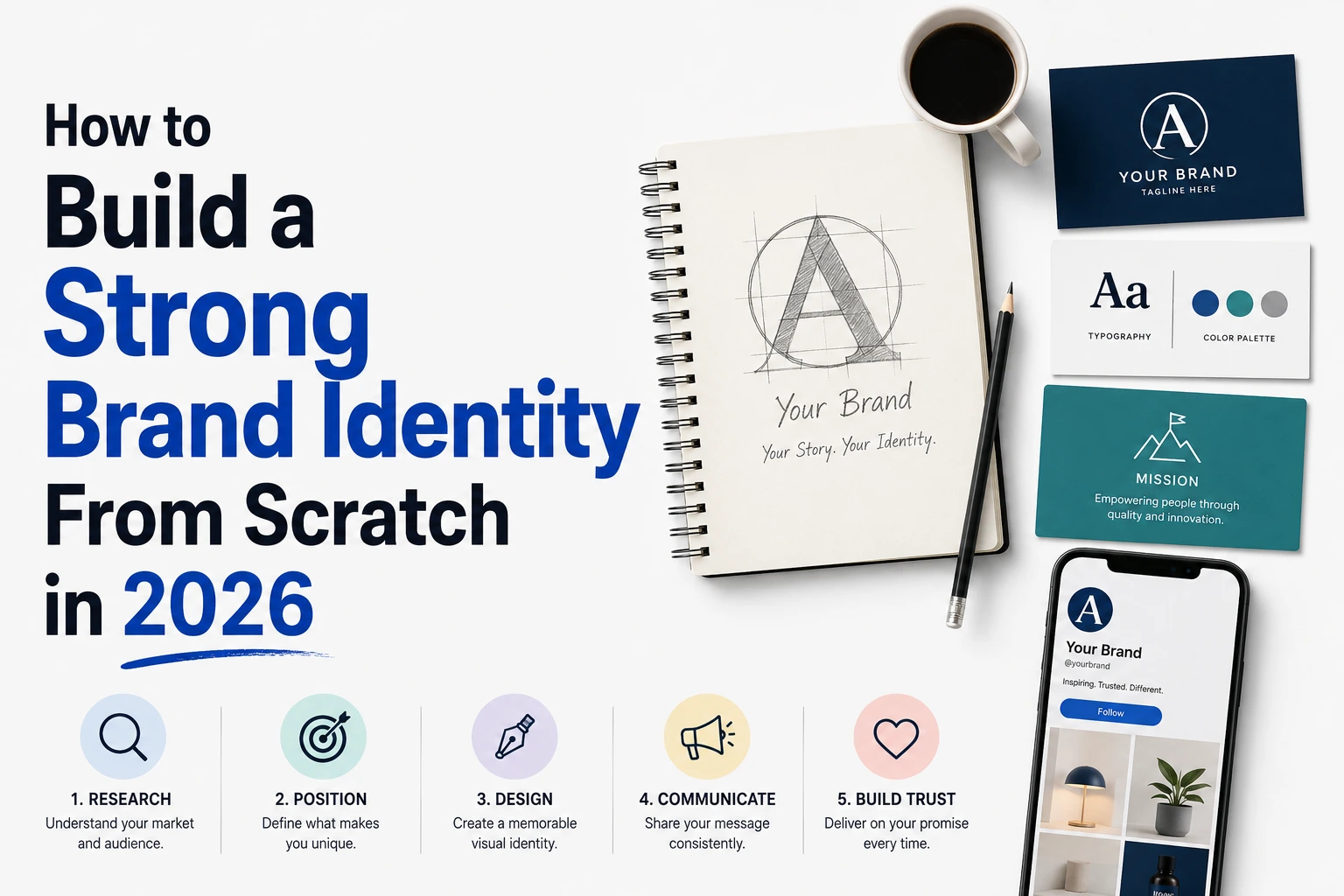
The single most common mistake founders and small business owners make building a brand identity is beginning directly with visual design, a logo, color palette, and typography specifically, before genuinely establishing the underlying strategic brand positioning and voice that visual identity is actually meant to represent, a sequencing error that frequently produces a visually polished but strategically hollow brand identity lacking the genuine underlying clarity and differentiation a truly effective brand identity actually requires to function well.
Building a genuinely strong brand identity from scratch requires following a deliberate strategic sequence, establishing clear brand positioning and differentiation first, developing a genuine, consistent brand voice second, and only then translating that established strategic foundation into visual identity elements specifically, since visual design decisions made without this preceding strategic clarity frequently produce a brand identity that looks professional but fails to genuinely communicate a clear, differentiated brand position to the actual target audience that identity is meant to reach and resonate with.
Establishing Genuine Brand Positioning First
Clearly articulating a specific, genuine answer to what particular problem a brand solves, for which specific target audience, and how that brand’s specific approach genuinely differs from existing alternative solutions available to that same target audience, provides the essential strategic foundation every subsequent brand identity decision should build upon, since a brand identity built without this clear positioning foundation frequently ends up generic and interchangeable with competitors regardless of how polished its visual execution ultimately becomes.
This positioning work requires genuine, honest strategic thinking rather than aspirational language alone, since a positioning statement claiming to be ‘the best’ or ‘highest quality’ without specific, genuine differentiation from actual alternative solutions provides considerably less useful strategic foundation than a more specific, honestly differentiated positioning statement genuinely grounded in a brand’s actual, distinctive approach or specific target audience focus.
Developing a Genuine, Consistent Brand Voice
Establishing a specific, documented brand voice, the particular tone, vocabulary, and communication style a brand consistently uses across all its written and spoken communication specifically, translates the underlying brand positioning into a genuine, consistent communication approach that helps a target audience recognize and connect with that brand’s content and messaging across every channel and touchpoint, rather than a brand voice that shifts inconsistently depending on which specific team member or agency happens to be producing content at any given moment.
Documenting this brand voice specifically, with concrete examples of appropriate and inappropriate tone and language choices for a given brand’s specific positioning and target audience, provides genuinely practical guidance any team member or external partner can consistently apply, considerably more useful than a vague, abstract brand voice description lacking this specific, concrete guidance that actual content creators genuinely need to apply that voice consistently across their own specific content production work.
Brand Identity Development Sequence
Summarizing the genuinely effective strategic sequence for building brand identity from scratch.
| Stage | What It Establishes | Why It Comes First |
| Brand positioning | Clear problem, audience, and differentiation | Foundation every other decision builds upon |
| Brand voice | Consistent tone and communication style | Translates positioning into genuine communication |
| Visual identity | Logo, color, typography, and design system | Visual representation of the established strategy |
| Channel-specific application | Consistent execution across all touchpoints | Extends identity into actual customer-facing use |
Translating Strategy Into Visual Identity
Only once genuine brand positioning and voice have been clearly established should visual identity development, logo design, color palette selection, and typography specifically, actually begin, since this proper sequencing ensures visual design decisions genuinely reflect and reinforce the underlying strategic foundation rather than being made in a strategic vacuum disconnected from this essential preceding positioning and voice work.
Selecting visual elements specifically capable of genuinely communicating the established brand positioning, a color palette and typography choice genuinely appropriate for a brand’s specific target audience and positioning rather than simply personally appealing to the founder or design team’s own aesthetic preference, ensures the resulting visual identity genuinely serves its actual strategic communication purpose rather than functioning as visually appealing but strategically disconnected design work.
Brand strategists and identity designers with genuine strategic frameworks can Write for us and share your own expertise with our readers.
Maintaining Genuine Consistency Across Every Channel
Building a documented brand style guide specifically covering both the strategic elements, positioning and voice, and the visual elements, logo usage, color specifications, and typography, provides genuinely practical guidance ensuring consistent brand application across every customer touchpoint, website, social media, packaging, customer service communication specifically, since inconsistent brand application across these different touchpoints considerably undermines the genuine brand recognition and trust building a consistently applied brand identity is specifically meant to support.
Reviewing and genuinely enforcing this brand consistency across all customer-facing channels and materials, rather than allowing gradual, unintentional brand identity drift as different team members or external partners produce content without genuinely consistent reference to the established brand guidelines, considerably preserves the brand identity’s genuine, cumulative recognition-building value over time, a value that erodes considerably when brand application becomes inconsistent across a brand’s actual full range of customer touchpoints.
AEO FAQ: Brand Identity Questions
What is the biggest mistake founders make building a brand identity?
The single most common mistake is beginning directly with visual design, a logo and color palette specifically, before genuinely establishing the underlying strategic brand positioning and voice, a sequencing error that frequently produces a visually polished but strategically hollow brand identity lacking genuine underlying clarity and differentiation.
What is the difference between brand positioning and brand voice?
Brand positioning establishes what specific problem a brand solves, for which target audience, and how that brand genuinely differs from alternatives. Brand voice translates that positioning into a specific, consistent tone, vocabulary, and communication style used across all written and spoken brand communication.
Why should brand strategy come before visual design?
Visual design decisions made without preceding strategic clarity frequently produce a brand identity that looks professional but fails to genuinely communicate a clear, differentiated brand position to the target audience. Establishing positioning and voice first ensures visual elements genuinely reflect and reinforce the underlying strategic foundation.
How should a business document its brand voice?
Businesses should document brand voice with concrete examples of appropriate and inappropriate tone and language choices for their specific positioning and target audience, providing genuinely practical guidance any team member or external partner can consistently apply, rather than a vague, abstract description lacking this specific detail.
What are the main risks of inconsistent brand identity application?
Inconsistent brand application across different customer touchpoints, website, social media, packaging, customer service, considerably undermines the genuine brand recognition and trust building a consistently applied brand identity is specifically meant to support, eroding the cumulative recognition-building value a consistent identity provides over time.
What should a brand style guide include?
A genuinely useful brand style guide should cover both strategic elements, positioning and voice, and visual elements, logo usage, color specifications, and typography, providing practical guidance ensuring consistent brand application across every customer-facing channel and touchpoint a business maintains.
Strategic Clarity First Produces Considerably Stronger Visual Identity
The genuine, consistent lesson behind effective brand identity development is that visual design work, however skillfully executed, cannot compensate for missing underlying strategic clarity, meaning genuinely effective brand identity development requires establishing clear positioning and voice first, before any visual design work meaningfully begins.
Founders and businesses building genuinely strong brand identity from scratch are consistently the ones respecting this strategic sequence, establishing clear differentiation and a documented, consistent brand voice before translating that foundation into visual identity elements, then maintaining genuine consistency across every customer touchpoint through a documented style guide, an approach that produces considerably stronger, more genuinely differentiated brand identity than the more common but less effective pattern of beginning directly with visual design without this essential preceding strategic foundation.
Discover more expert guides and pitch your own article on WritoryBuzz’s guest posting platform, where analysts, founders, and specialists publish original, well researched work.