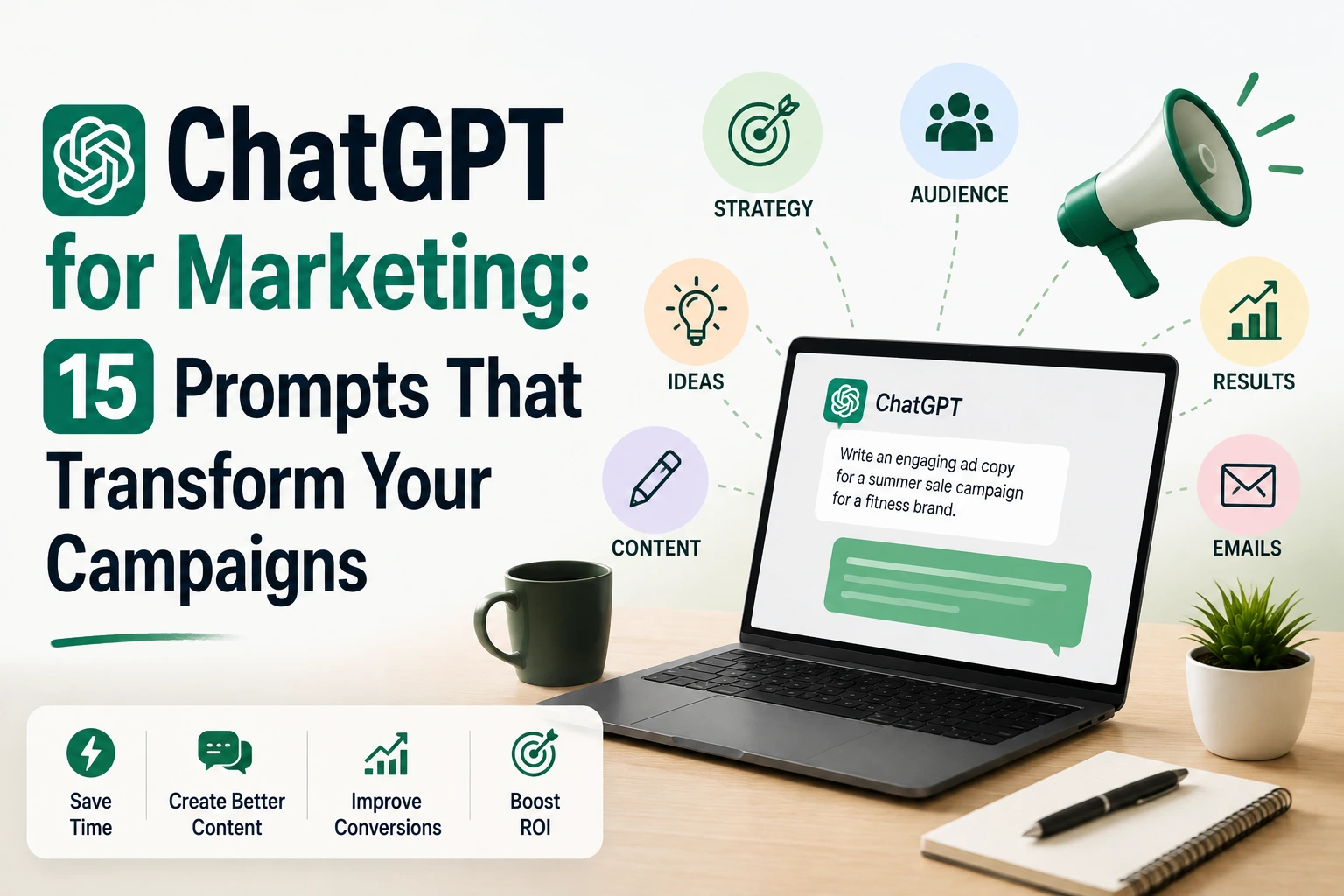
The genuine quality difference between a generic ChatGPT prompt producing bland, unusable marketing copy and a specific, well-constructed prompt producing genuinely useful marketing output comes down almost entirely to the specific context and constraint detail included within that prompt, brand voice specifics, target audience detail, and a clearly defined output format and length specifically, rather than any difference in the underlying AI model’s own capability, meaning prompt construction quality genuinely determines marketing output usefulness considerably more than most marketers initially recognize.
The fifteen prompts below are organized across genuine marketing workflow stages, strategy and planning, content creation, and campaign optimization specifically, each built around specific, detailed prompt construction principles that produce considerably more genuinely useful marketing output than a more generic, underspecified prompt approach would typically achieve for that same underlying marketing task or need.
Strategy and Planning Prompts
A genuinely effective customer persona development prompt should specify the target industry, product category, and any existing customer data or research already available, asking ChatGPT to synthesize this specific information into a detailed persona including genuine pain points, buying triggers, and preferred communication channels, rather than a generic ‘create a customer persona’ prompt lacking this specific contextual grounding the AI system needs to produce genuinely useful, specific output rather than a generic, broadly applicable persona template.
A content calendar planning prompt specifying the target audience, key campaign themes or product launches for the coming period, preferred content formats, and posting frequency across specific platforms produces a considerably more genuinely usable content calendar than a generic ‘create a content calendar’ request lacking this specific strategic context and constraint detail.
Content Creation Prompts
Effective ad copy prompts should specify the specific platform, target audience demographic and psychographic detail, the specific product or service benefit being emphasized, and any specific brand voice guidelines or examples of previous successful ad copy, providing ChatGPT genuine grounding for producing platform-appropriate, audience-specific ad copy rather than generic, broadly applicable copy lacking this specific targeting and brand voice precision.
Email subject line generation prompts specifically requesting multiple distinct variations, each testing a genuinely different psychological angle, curiosity, urgency, direct benefit statement specifically, provides considerably more genuinely useful, testable output than a single generic subject line request, since this variation-focused prompt structure directly supports the A/B testing approach genuinely effective email marketing optimization typically requires.
Fifteen Prompts Organized by Marketing Workflow Stage
The table below summarizes representative prompts across the three core marketing workflow stages this guide covers.
| Workflow Stage | Prompt Focus | Key Specificity Element to Include |
| Strategy and planning | Customer persona development | Industry, existing data, pain points |
| Strategy and planning | Content calendar creation | Campaign themes, formats, platform-specific frequency |
| Content creation | Platform-specific ad copy | Audience detail, benefit focus, brand voice examples |
| Content creation | Email subject line variations | Multiple distinct psychological angles |
| Campaign optimization | A/B test hypothesis generation | Current performance data, specific variable to test |
| Campaign optimization | Campaign performance analysis summary | Specific metrics, comparison benchmarks |
Campaign Optimization and Analysis Prompts
A/B test hypothesis generation prompts specifically providing current campaign performance data and asking ChatGPT to suggest specific, testable variations targeting a particular identified weakness, low click-through rate on a specific ad element, for example, produce considerably more genuinely actionable optimization suggestions than a generic ‘improve my campaign’ request lacking this specific performance data grounding and identified weakness focus.
Campaign performance analysis summary prompts specifically providing raw performance data alongside relevant comparison benchmarks, industry averages or previous campaign performance specifically, and requesting a clear, specific summary of key takeaways and recommended next steps, produce genuinely more useful analytical output than requesting a general performance summary without this specific comparative benchmark context grounding that analysis.
Marketing professionals and prompt engineering specialists with genuinely tested prompt frameworks can Write for us and share your own expertise with our readers.
The Underlying Principle Behind Effective Marketing Prompts
Every genuinely effective prompt across these fifteen examples shares the same underlying construction principle, providing specific contextual detail, target audience information, brand voice guidance, and clear output format expectations, rather than a brief, generic request lacking this specific grounding, since ChatGPT’s output quality directly reflects the specificity and detail quality of the input prompt considerably more than any inherent limitation in the underlying AI model’s own marketing knowledge and capability.
Marketers genuinely improving their AI-assisted marketing output quality are consistently the ones investing genuine time in prompt construction specifically, building a personal library of genuinely well-constructed, reusable prompt templates specifically tailored to their own brand voice and target audience, rather than repeatedly constructing generic, underspecified prompts and accepting the correspondingly generic, less useful output that approach typically produces.