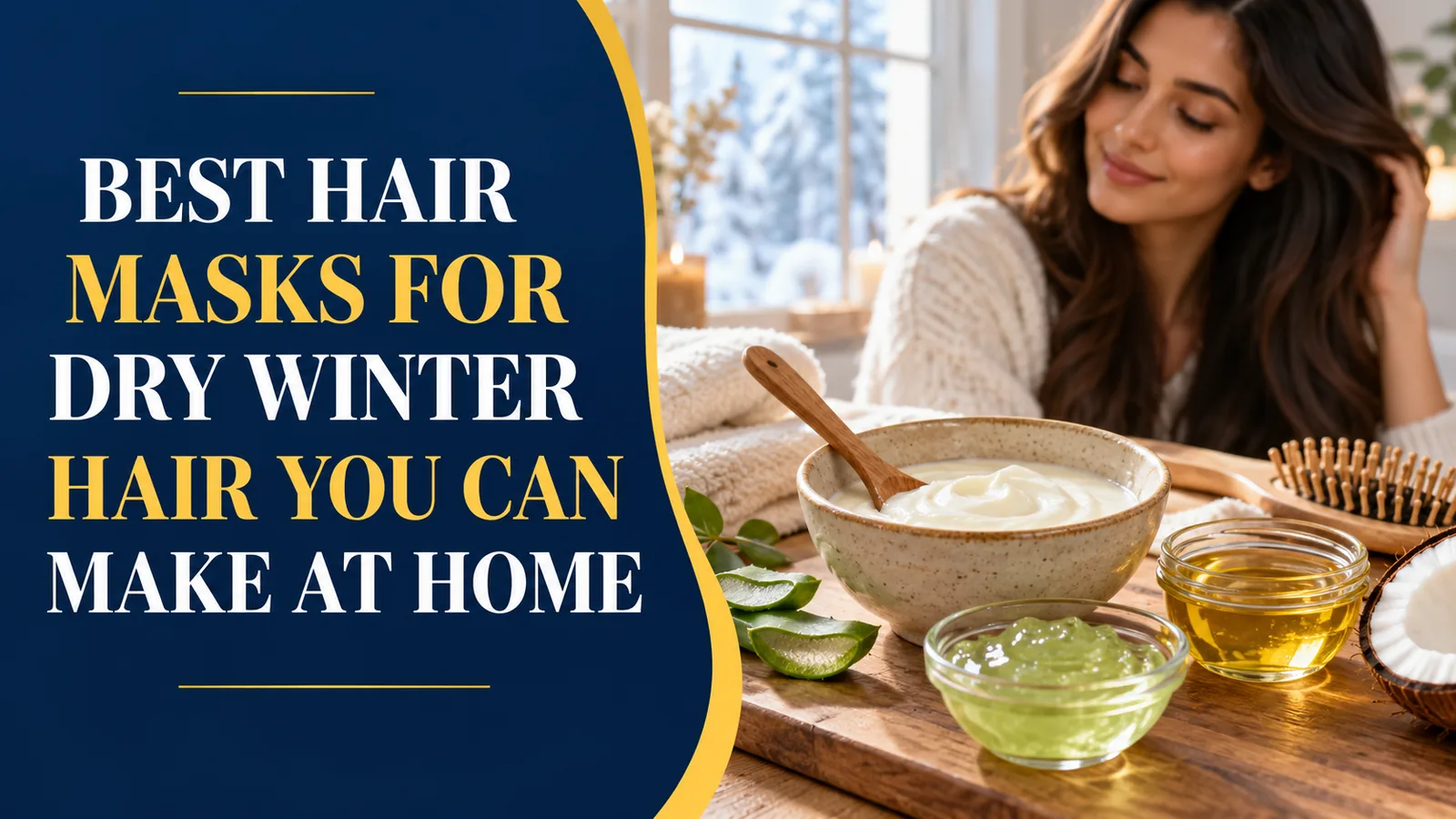
The American Academy of Dermatology’s hair advice does not mention a single kitchen ingredient. It tells you to apply shampoo to your scalp, not the full length of your hair, to use conditioner after every wash, to limit heat styling and to use low or medium heat with a heat-protectant product. Those habits matter more than any mask, which is why a good winter hair routine starts with them and then adds a mask for extra moisture.
This guide covers the best hair masks for dry winter hair that you can make at home, with simple recipes, how often to use them, how to apply them and when a store-bought mask or a dermatologist is the better route. Evidence for home recipes is limited, so treat them as low-cost conditioning treatments, not medical treatments.
Why Hair Gets Drier in Winter
Cold outdoor air and dry indoor heating pull moisture from hair, and wool hats and scarves add friction. Hot showers and frequent heat styling make it worse. Hair that is already coloured, permed or heat-styled starts with a weaker surface, so winter exposes the damage. Our guide to hair care for damaged hair explains how to repair what is already weakened.
The AAD says a rinse-off conditioner may not be enough for long, fine, colour-treated, permed or heat-styled hair, and that a leave-in product can help. A mask sits between the two: a deeper conditioning treatment you use once or twice a week.
Dermatologist Basics Before You Mask
The AAD recommends washing based on how quickly your hair gets dirty or oily. Dry, textured, curly or thick hair needs washing less often than straight, oily hair, and the AAD says some people can go about two to three weeks between washes. Apply shampoo to your scalp, not the whole length, and use conditioner after every wash. Detangle wet hair with a wide-tooth comb, working from the ends up, and wrap hair gently in a towel or t-shirt instead of rubbing it. Limit blow-drying and flat or curling irons, and use low or medium heat with a heat protectant.
These steps cost nothing and protect your hair between masks. If you have curls or coils, our curly hair care routine guide adds moisture-first techniques.
6 Hair Masks You Can Make at Home
These recipes use common kitchen ingredients. They are popular conditioning treatments rather than clinically proven cures, so patch-test on your inner forearm first and skip any ingredient you are allergic to.
| Mask | Ingredients | How to use |
|---|---|---|
| Banana and honey | 1 ripe banana mashed smooth, 1 tablespoon honey, 1 tablespoon yoghurt | Apply mid-length to ends, leave 20 minutes, rinse well |
| Avocado and olive oil | Half a ripe avocado, 1 tablespoon olive oil | Mash smooth, apply to damp hair, leave 20 to 30 minutes |
| Yoghurt and honey | 3 tablespoons plain yoghurt, 1 tablespoon honey | Apply to damp hair, leave 15 to 20 minutes |
| Coconut oil | 1 to 2 tablespoons warmed coconut oil | Apply to ends only, leave 30 minutes, shampoo carefully |
| Egg and olive oil | 1 egg, 1 tablespoon olive oil | Apply, leave 15 minutes, rinse with cool water, not hot |
| Aloe and conditioner | 2 tablespoons aloe vera gel, 1 tablespoon your usual conditioner | Mix, apply after shampooing, leave 10 minutes |
Strain or blend ingredients so that no lumps stay in your hair, and rinse thoroughly with lukewarm water. Coconut oil and heavy oils can weigh down fine hair, so use less if your hair is fine. For an everyday boost, our healthy breakfast ideas can give you ingredients like avocado and yoghurt for both eating and masking.
How Often to Use a Hair Mask
Once a week is enough for most dry hair. Very dry, coloured or heat-styled hair can handle two sessions a week for a few weeks, then drop back. Overuse can leave hair limp or greasy. Apply masks after shampooing for the best absorption, concentrating on the mid-lengths and ends, which are the driest and oldest parts.
| Hair type | Frequency | Tips |
|---|---|---|
| Fine or straight | Once every 1 to 2 weeks | Use light masks, keep away from roots |
| Thick or curly | Once a week | Use richer masks; apply with a wide-tooth comb |
| Coloured, permed or heat-styled | One to two times a week for a few weeks | Pair with a leave-in and a heat protectant |
| Oily scalp, dry ends | Ends only | Avoid the scalp to prevent buildup |
Leave-In Conditioners and Store-Bought Masks
A mask is optional if you already use a leave-in conditioner properly. The AAD says a leave-in can help long, fine, coloured, permed or heat-styled hair, and that you should choose one made for your hair type, with curly hair usually needing more conditioning and fine, straight hair needing a lighter product. Apply it to slightly damp hair, in the smallest amount that works, and keep it off the scalp to avoid buildup. If hair still feels dry or frizzy, the AAD suggests adding a small amount of oil, such as argan oil.
The AAD also warns not to leave a rinse-off conditioner in your hair or mix it with water in a spray bottle, because it contains detergent and can cause damage. A store-bought mask may be worth it if you want consistent texture, protein or bond-repair ingredients, or have limited time. Look for fragrance-free options if your scalp is sensitive.
When to See a Dermatologist
If your hair keeps breaking, falls out in clumps, or your scalp is itchy, flaky or sore even with good care, see a board-certified dermatologist. Dryness can be a sign of other conditions. Do not keep adding products if the problem persists.