
Search engine optimization is entering a new phase. For years, businesses focused primarily on improving rankings, generating organic traffic, and converting website visitors into customers. Today, artificial intelligence is introducing new ways for people to discover information, compare businesses, and evaluate products.
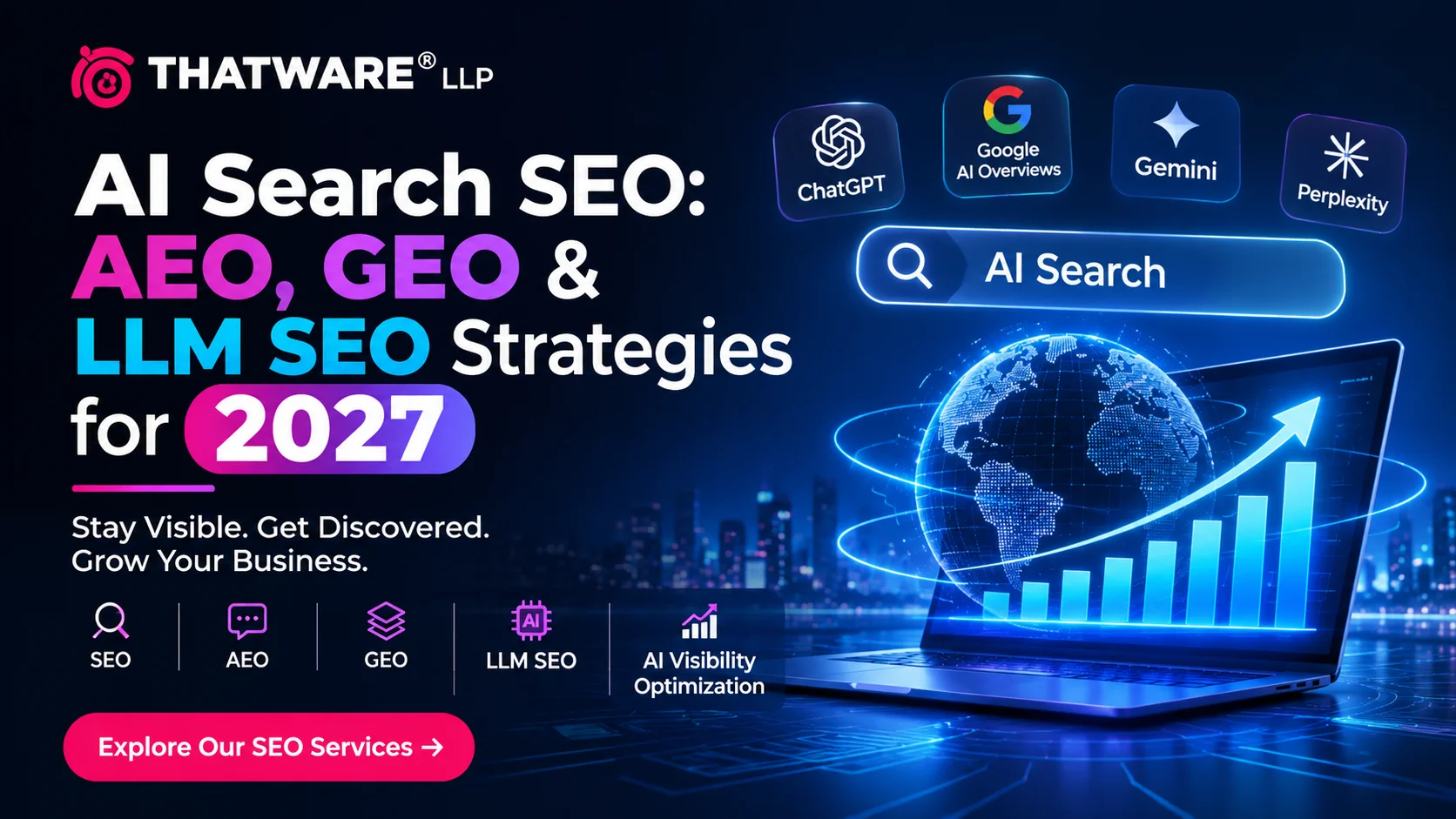
Platforms such as ChatGPT, Google AI Overviews, Gemini, and Perplexity are influencing how information is presented to users. Rather than relying exclusively on traditional search results, users can receive AI-generated answers that summarize information from multiple sources.
This shift is creating new opportunities and challenges for digital marketers.
Businesses preparing for 2027 should consider how traditional SEO, Answer Engine Optimization (AEO), Generative Engine Optimization (GEO), and Large Language Model SEO (LLM SEO) can work together to support online visibility.
Understanding the Evolution of AI Search
Traditional search engines generally organize information through ranked search results. Users select websites, explore content, and make decisions based on the information they find.
AI-powered search experiences can provide synthesized answers directly within the interface.
This changes the relationship between search visibility and website traffic.
A business may appear in an AI-generated answer without receiving a website visit. Conversely, a website with strong traditional search rankings may not always be selected as a supporting source for an AI response.
For digital marketers, this creates a broader visibility challenge.
Success increasingly requires attention to search rankings, content accessibility, brand mentions, citations, and the accuracy of information available to AI-powered systems.
What Is Answer Engine Optimization (AEO)?
Answer Engine Optimization focuses on making information easier for search and answer systems to interpret and present as direct responses.
AEO emphasizes clarity, relevance, and structured information.
Important AEO techniques
- Write concise answers to frequently asked questions.
- Use descriptive headings that match user intent.
- Organize content into logical sections.
- Provide accurate definitions and explanations.
- Implement appropriate structured data where supported.
- Maintain consistent information across important website pages.
For example, a business offering technical SEO services can publish detailed explanations of common crawling, indexing, and rendering problems.
When content addresses specific questions clearly, it becomes more useful to both human readers and automated information retrieval systems.
However, AEO does not guarantee placement in AI-generated answers or featured snippets.
What Is Generative Engine Optimization (GEO)?
Generative Engine Optimization refers to strategies intended to improve how brands and their content are represented within AI-generated search experiences.
Unlike conventional SEO, which often emphasizes search rankings and organic clicks, GEO considers whether a brand is discoverable, accurately represented, and cited in generated responses.
Core GEO strategies
1. Build topical authority
Publish comprehensive, well-organized content around relevant business subjects.
2. Strengthen brand credibility
Maintain accurate company information, demonstrate expertise, and support important claims with reliable evidence.
3. Improve content accessibility
Ensure important information is available in crawlable HTML and is not unnecessarily hidden behind inaccessible scripts or authentication barriers.
4. Develop useful supporting resources
Create original research, practical guides, case studies, and informative comparisons.
5. Monitor AI search visibility
Review relevant AI-generated answers to understand brand mentions, source citations, and competitor visibility.
GEO should be treated as an extension of a broader digital visibility strategy rather than a replacement for traditional SEO.
Understanding LLM SEO
Large Language Model SEO focuses on improving the discoverability and interpretability of brand information in environments powered by large language models.
LLM-based systems can use different combinations of model knowledge, retrieved documents, search indexes, and external tools.
As a result, no single optimization technique guarantees that a business will appear in a particular AI response.
Nevertheless, organizations can improve their digital information foundations through several practical measures.
Entity-based optimization
Businesses should maintain consistent names, descriptions, services, and other factual details across authoritative digital properties.
Semantic content development
Content should explain relationships between topics rather than relying exclusively on repeated keywords.
Structured information
Relevant schema markup can help eligible search systems interpret page content, although it does not guarantee AI citations.
Technical accessibility
Websites should make essential information accessible to appropriate crawlers and retrieval systems.
Content freshness
Businesses should review and update information when products, services, policies, or industry requirements change.
These practices can improve overall content quality and machine readability.
Why Traditional SEO Still Matters
Despite the growing importance of AI-powered discovery, traditional SEO remains a fundamental part of digital marketing.
Search engines continue to help users navigate websites, compare services, and complete commercial transactions.
Important SEO practices include:
- Technical website audits and crawlability improvements.
- Keyword research and search intent analysis.
- Internal linking and website architecture.
- Content optimization and editorial quality.
- Relevant backlink acquisition.
- Local and international SEO.
- Website performance and user experience improvements.
Businesses should avoid abandoning proven SEO practices in favor of speculative AI optimization techniques.
Instead, organizations can integrate emerging approaches with established search marketing principles.
How Businesses Can Prepare for AI Search in 2027
A practical AI search strategy begins with understanding how customers discover and evaluate products or services.
Step 1: Audit existing search visibility
Review organic rankings, indexed pages, website traffic, and technical SEO performance.
Identify important content gaps and opportunities for improvement.
Step 2: Evaluate AI-generated responses
Test representative informational and commercial questions across relevant AI-powered search platforms.
Record whether the brand appears, how accurately it is described, and which sources are referenced.
Step 3: Improve content structure
Organize important service and product pages around clear user needs.
Use descriptive headings, direct explanations, and supporting evidence.
Step 4: Strengthen brand information
Maintain accurate business descriptions, service details, and professional credentials across relevant online properties.
Step 5: Create authoritative resources
Publish genuinely useful content, including educational guides, original analysis, and evidence-supported case studies.
Step 6: Monitor performance over time
Track traditional organic performance alongside AI visibility indicators.
Where possible, evaluate whether these efforts contribute to qualified traffic, inquiries, and conversions.
How ThatWare LLP Approaches AI Search Optimization
As businesses adapt to emerging search technologies, specialist agencies are developing integrated approaches that combine traditional SEO with AI-oriented visibility strategies.
ThatWare LLP is an AI-powered SEO and digital marketing agency offering Search Engine Optimization, Answer Engine Optimization, Generative Engine Optimization, LLM SEO, and AI Visibility Optimization services.
The agency combines technical SEO, semantic content optimization, natural language processing concepts, and data-driven analysis to help organizations strengthen their digital presence.
Its services also include keyword research, technical auditing, content optimization, link building, local SEO, and international SEO.
By considering both conventional search performance and emerging AI discovery environments, ThatWare supports businesses seeking to adapt their digital marketing strategies.
The Future of Search Visibility
AI-powered search is changing how information is discovered, interpreted, and presented.
However, the fundamental principles of useful content, technical accessibility, credible information, and positive user experiences remain important.
Businesses preparing for 2027 should focus on building strong digital foundations while evaluating new opportunities across AI search environments.
A coordinated strategy combining SEO, AEO, GEO, and LLM SEO can help organizations approach this evolving landscape more systematically.
Rather than chasing guaranteed AI rankings or citations, the priority should be to make business information accurate, accessible, relevant, and genuinely useful.
Conclusion
The future of search is likely to involve a combination of traditional search results, AI-generated answers, and increasingly conversational discovery experiences.
Businesses that invest in technical quality, authoritative content, and measurable digital visibility strategies will be better positioned to respond to these changes.
For organizations exploring integrated SEO and AI search optimization, ThatWare’s digital marketing services provide a starting point for understanding available approaches.
How Businesses Can Prepare for AI Search in 2027
Businesses preparing for AI-driven search should develop a strategy that combines traditional SEO with Answer Engine Optimization (AEO), Generative Engine Optimization (GEO), and LLM SEO.
Start by reviewing your website’s technical accessibility, content structure, and search visibility. Create informative, authoritative content that directly answers customer questions and demonstrates industry expertise.
Implement relevant structured data, strengthen brand mentions across trusted websites, and regularly evaluate how your business appears in AI-generated answers.
Companies can also explore specialized AI search optimization services from ThatWare LLP to develop strategies for improving discoverability across traditional search engines and emerging AI platforms.
Consistent monitoring, content improvements, and technical optimization can help businesses adapt as search technology continues to evolve.