
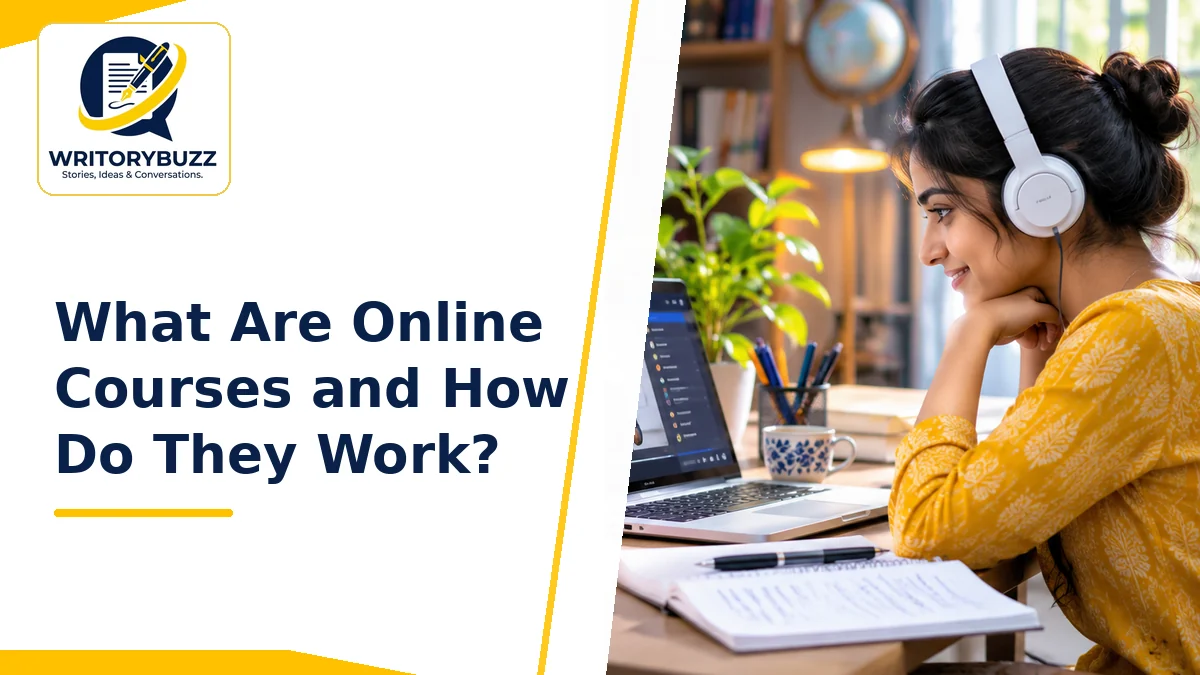
An online course is a structured set of lessons delivered over the internet, usually as recorded video, readings, quizzes and assignments, that you can finish on your own schedule or alongside a live cohort. You sign up on a platform, pay a fee or join free, work through modules, and often earn a certificate at the end. The best ones feel like a short, focused classroom that you carry in your phone.
If you are choosing between sites, our comparison of Coursera vs Udemy vs edX is a good next step, and our guide on how to study effectively helps you make the hours count.
How Does an Online Course Actually Work?
Most courses follow the same loop. You enrol, get access to a dashboard, watch short videos of 5 to 15 minutes each, answer a quiz and submit an assignment. Some platforms add discussion forums, live doubt sessions or a mentor who reviews your work.
A typical 6-week course asks for 3 to 5 hours a week, which is about 20 to 30 hours in total. Self-paced courses let you stop and start; cohort courses give you deadlines, which many people find helpful because the deadline does the nagging for you.
A small human detail: most learners do not watch in one sitting. They watch on the metro, during lunch, or after the kids sleep. Courses with short lessons and a “resume where you left off” button are built for that reality.
What Are the Main Types of Online Courses?
| Type | Typical length | Typical cost in India | Best for |
|---|---|---|---|
| Self-paced video course | 2 to 40 hours | Free to about 3,000 rupees | Learning one skill cheaply |
| MOOC (university or institute linked) | 4 to 12 weeks | Free to audit, fee for certificate | Structured academic topics |
| Cohort-based course | 3 to 12 weeks | 5,000 to 50,000 rupees | Accountability and feedback |
| Bootcamp | 3 to 9 months | 50,000 rupees to several lakh | Career switch with projects |
| Online degree or diploma | 1 to 3 years | 1 lakh rupees and above | A recognised qualification |
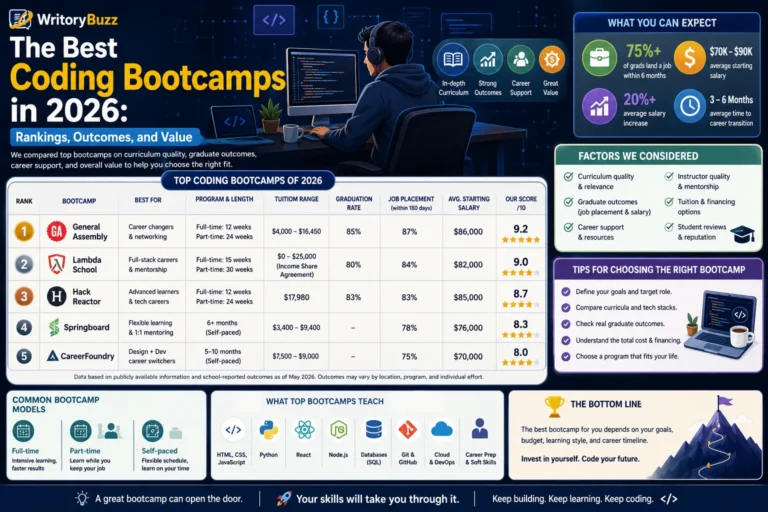
These ranges are rough and change often. Always check the current price on the course page. Our list of coding bootcamps shows what the higher end looks like.
Are Free Online Courses Really Free?
Often yes, but with a catch. Many platforms let you watch for free and charge only if you want a graded assignment or a certificate. Government-backed options such as SWAYAM and NPTEL offer free learning, with a separate proctored exam fee if you want a certificate; for the July 2025 semester the exam fee was listed at 750 rupees for one SWAYAM course for general category candidates and 500 rupees for reserved categories, while NPTEL proctored exams have been listed at about 1,000 rupees per course. Fees change every semester, so check the course page before you register.
Free is a good way to test whether you like a subject. Paying makes sense when you need structure, feedback or a credential that someone else will recognise.
Does an Online Course Certificate Count for Jobs?
It helps a little and a portfolio helps a lot. A certificate shows you completed something, and it can support a job application when the provider is known. Recruiters in most fields still want proof of what you can do, such as a dashboard, a piece of code, a campaign plan or a written sample.
Treat the certificate as a receipt and the project as the product. If a course has no project at all, that is worth noticing before you pay.
How Do You Choose the Right Online Course?
Start with the result you want, such as “build a dashboard” or “run my first ad campaign”. Then check four things: who teaches it and what they have done, the syllabus, a sample lesson, and reviews that mention outcomes rather than just “great course”. Our pre-purchase red flag checklist goes through this in detail, and online courses for beginners helps if this is your first time.
What Do Completion Numbers Say About Online Courses?
Not many people finish open online courses, and it helps to know that before you start. In 2013 Katy Jordan, then a doctoral student at the Open University, collected figures for 29 free courses and found an average completion rate of 6.8 percent. The best result was 19.2 percent for an EPFL programming course on Coursera, and the worst was 0.8 percent for a Princeton history course.
Treat that number carefully. It is more than ten years old, it covers only 29 courses, and most of the figures came from news reports and university presentations rather than from the platforms. Completion also usually meant earning a certificate, so someone who watched half the lectures and got what they needed was counted as a dropout. Still, the pattern is useful: courses with automatic marking averaged 7.7 percent, while those with peer assessment averaged 4.8 percent.
The practical lesson is that finishing is a skill separate from learning. A course you pay for, schedule and tell a friend about is far more likely to get finished than one you bookmark on a free trial. Our guide on how to finish an online course covers that side in detail.
What Does It Cost to Take an Online Course in India?
The honest answer is anything from nothing to several lakh rupees, and the label “online course” hides that spread. A few anchors from the platforms themselves help.
| Platform | What is free | What you pay for |
|---|---|---|
| Coursera | Many courses can be audited, with lectures, readings and forums | Graded assignments, certificates and some mentoring; many Specializations were listed at 39 to 79 US dollars a month in a March 2023 Class Central update |
| SWAYAM (government) | All lectures and reading material | Proctored exam, listed at 750 rupees for one course (general category) in the July 2025 semester |
| NPTEL | All lectures and assignments | In-person certification exam, about 1,000 rupees per course in a Careers360 summary; check the course page |
| Udemy | Some free courses | One-time course price, often discounted; check the refund terms on the course page |
Coursera also runs a financial aid programme for learners who cannot afford the fee, so look for that link before you give up on a course because of price. The Class Central figures are from 2023 and Coursera changes plans often, so use them as a guide to how pricing is structured, not as today’s rate card.
Do Employers Care About Online Course Certificates?
Platforms say yes, and learners tend to agree, but remember who is asking. Coursera’s 2025 Learner Outcomes Report, a survey of more than 52,000 learners in 179 countries run with The Harris Poll, found that 91 percent reported a positive career outcome after a course and 46 percent reported a salary increase. For India the survey reported 95 percent and 55 percent. These are self-reported numbers from Coursera’s own learners, so they show how people feel about the experience and not that a certificate causes a raise.
What hiring managers say in interviews is usually more modest: they like evidence. A certificate from a known institute shows you finished something. A project you can open in an interview shows what you can do. If you can only have one, build the project.
How Do You Check That an Online Degree Is Recognised?
Short courses need no approval, but an online degree or diploma does. In India, online and open and distance programmes fall under the UGC (Open and Distance Learning Programmes and Online Programmes) Regulations, 2020, amended since. Before you pay, confirm on the UGC-DEB portal that the institution is approved to offer that specific programme in that academic year. A university name on a brochure is not enough, because approval is given programme by programme.
If you are taking a course only for skills, you can skip this step. If a job application, a government exam or higher study will depend on the qualification, do it first and keep a screenshot of the approval page.
What Does a Good First Week Look Like?
Most people begin with enthusiasm and lose it by week three, so the first week should be about building a routine, not covering content. Pick one course. Watch the preview or the first lesson and check that the teacher’s pace works for you. Put three fixed slots in your calendar, for example Tuesday and Thursday evenings and Sunday morning, each 40 minutes long. In the first slot, only set up your notebook and download any files. In the next two, finish the first module and do the first quiz even if it feels easy.
By the end of the week you should be able to say what the course will let you make and by what date. If you cannot, the course is probably too vague for your goal and a different one will serve you better.
Which Type of Course Should You Start With?
If you are unsure, start with a self-paced course of under 15 hours. It is cheap enough that abandoning it costs little, long enough to give you a real feel for the subject, and flexible enough to fit around work. Cohort courses and bootcamps make more sense once you have already finished one short course and know you will keep going, because their higher price and fixed schedule punish a false start.
Online degrees sit in a separate category and should not be chosen on impulse. They are a multi-year commitment, they depend on the institution’s approval, and they are worth considering only when a recognised qualification is what you actually need. Many people who want a skill sign up for a degree when a six-week course would have done the job.
What Equipment and Setup Do You Need?
Less than you think. A phone is enough for lectures and quizzes in most courses, and a laptop becomes necessary only when the course involves writing code, building spreadsheets or using design software. A pair of earphones helps more than any other accessory, because it lets you study on a train or in a shared home without distraction. Keep a physical notebook next to you, since handwriting a short summary after each lesson is one of the simplest ways to check you have understood it.