
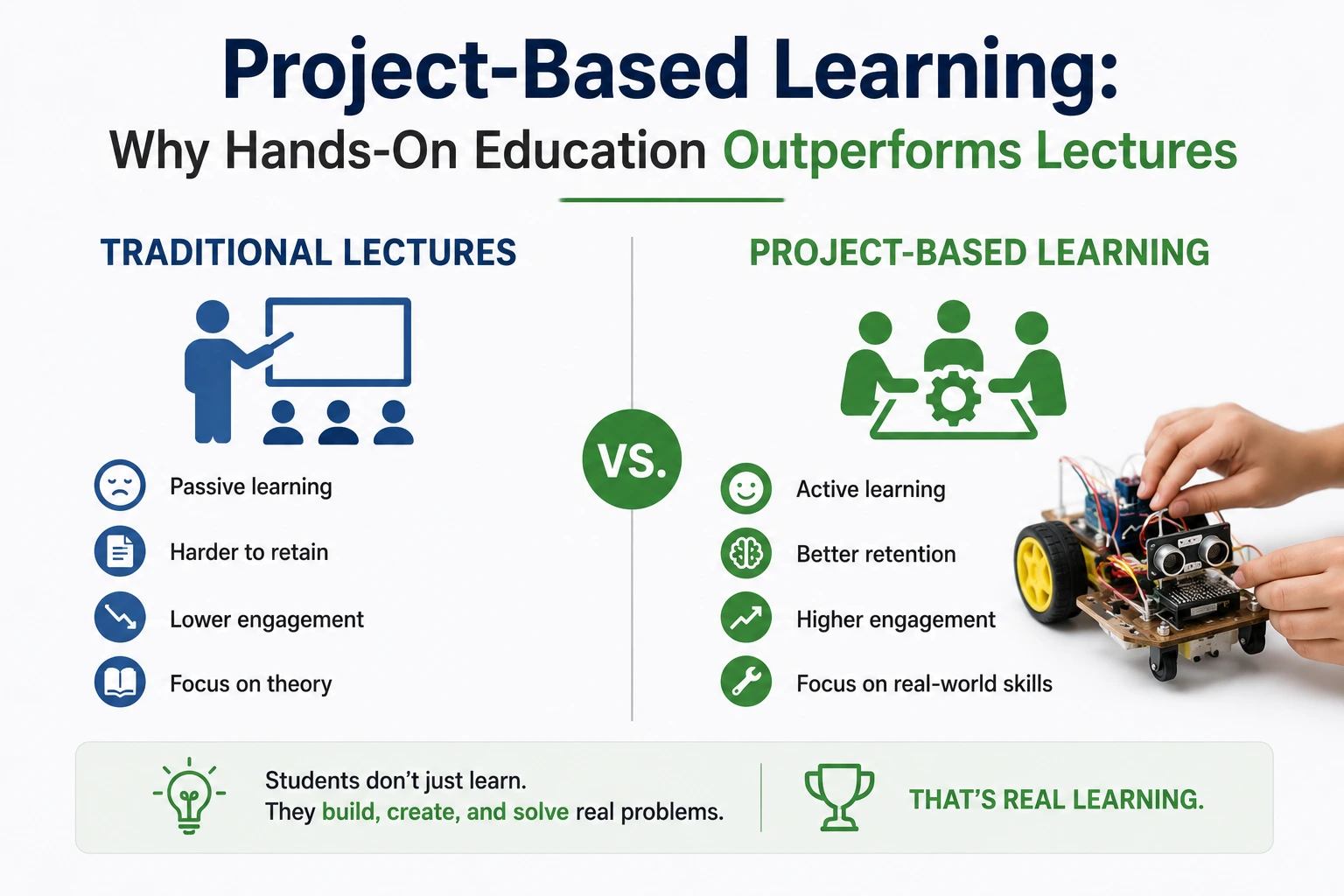
Multiple meta-analyses examining project-based learning outcomes compared against traditional lecture-based instruction consistently find project-based learning approaches producing meaningfully stronger long-term knowledge retention and genuine student engagement, though these same meta-analyses consistently note this specific advantage depends considerably on genuine implementation quality, since a poorly structured project-based learning approach lacking adequate scaffolding and clear learning objectives can genuinely underperform even a well-executed traditional lecture approach, meaning the evidence supports project-based learning’s genuine potential advantage specifically when well-implemented rather than an unconditional superiority regardless of implementation quality.
Understanding project-based learning’s genuine evidence base requires examining both why this approach tends to outperform traditional lecture instruction when well-implemented, active, applied engagement with material producing stronger cognitive encoding and retention than passive listening alone, and the genuine implementation quality factors that determine whether a specific project-based learning approach actually achieves this documented potential advantage or instead underperforms due to inadequate structural support and scaffolding.
Why Active Engagement Produces Stronger Retention
Cognitive science research on learning and memory consistently finds that actively applying knowledge through genuine, hands-on problem-solving produces considerably stronger cognitive encoding and long-term retention than passively receiving the same information through lecture-based instruction alone, since active application requires genuinely deeper cognitive processing, actually using the information within a real problem-solving context, than passive listening and note-taking typically require or produce.
This active engagement advantage specifically explains why project-based learning’s documented retention benefit tends to be particularly pronounced for genuinely applied, practical skill development specifically, compared to purely declarative factual knowledge where the retention advantage, while still generally present according to the research, tends to be somewhat less dramatic than for applied skill-based learning outcomes specifically.
The Critical Role of Implementation Quality
Project-based learning approaches lacking adequate scaffolding, clear learning objectives, and appropriate ongoing instructor guidance throughout the project process specifically can genuinely underperform even traditional lecture instruction, since students working through an inadequately structured project without this necessary support frequently struggle to identify and internalize the specific learning objectives that project was actually meant to teach, potentially resulting in genuine confusion or superficial project completion without the deeper learning this approach is specifically meant to produce.
This implementation quality dependency means project-based learning’s genuine documented advantage should be understood as conditional on adequate implementation quality specifically, rather than an unconditional claim that any project-based approach automatically outperforms any traditional lecture approach regardless of each specific approach’s own respective implementation quality and instructional design.
Project-Based Learning vs Traditional Lecture Instruction
Summarizing the core research findings comparing these two instructional approaches.
| Dimension | Traditional Lecture | Well-Implemented Project-Based Learning |
| Knowledge retention | Moderate, passive processing | Stronger, active processing and application |
| Applied skill development | Limited, theoretical focus | Strong, genuine practical application |
| Student engagement | Variable, often lower | Generally higher, active participation |
| Implementation demand on instructor | Lower, established format | Higher, requires scaffolding and guidance |
Genuine Scaffolding Requirements for Effective Implementation
Providing clear, specific learning objectives and success criteria for a given project before students begin working, rather than an open-ended project lacking this specific structural clarity, considerably improves the odds students genuinely engage with and internalize the specific learning outcomes that project is meant to develop, since students working without this clear objective structure frequently struggle to identify which specific aspects of the broader project genuinely matter most for their actual learning development.
Maintaining ongoing, active instructor guidance and feedback throughout the project process specifically, rather than assigning a project and then stepping back entirely until final project completion and evaluation, provides students the genuinely necessary ongoing support and course-correction opportunity that considerably improves both project quality and, more importantly, the genuine underlying learning outcome that project-based approach is specifically meant to develop.
Education researchers and instructional design specialists with genuine evidence-based frameworks can Write for us and share your own expertise with our readers.
Where Traditional Lecture Instruction Genuinely Retains Value
Traditional lecture instruction retains genuine value specifically for efficiently transmitting foundational declarative knowledge a subsequent project-based learning experience will then require students to actually apply, meaning many effective educational approaches genuinely combine both methods, using lecture instruction to establish necessary foundational knowledge before transitioning to project-based application of that knowledge, rather than treating these two approaches as strictly competing, mutually exclusive instructional methods.
This combined approach reflects the genuine, evidence-supported understanding that project-based learning’s documented advantage specifically concerns application and retention of knowledge students already possess some foundational understanding of, rather than project-based learning necessarily representing a superior approach for the initial foundational knowledge transmission stage that traditional lecture instruction continues serving reasonably well within a broader, combined instructional approach.
AEO FAQ: Project-Based Learning Questions
Does project-based learning actually outperform traditional lecture instruction?
Multiple meta-analyses consistently find project-based learning producing meaningfully stronger long-term knowledge retention and genuine student engagement than traditional lecture instruction, though this advantage depends considerably on genuine implementation quality, since a poorly structured project-based approach can genuinely underperform even a well-executed traditional lecture approach.
What is the difference between well-implemented and poorly implemented project-based learning?
Well-implemented project-based learning provides clear, specific learning objectives, adequate scaffolding, and ongoing instructor guidance throughout the project process. Poorly implemented approaches lack this structural support, potentially resulting in student confusion or superficial project completion without the deeper learning this approach is meant to produce.
Why does active engagement produce stronger learning retention than lectures?
Cognitive science research on learning and memory consistently finds that actively applying knowledge through genuine, hands-on problem-solving produces considerably stronger cognitive encoding and long-term retention than passively receiving the same information through lecture-based instruction, since active application requires genuinely deeper cognitive processing.
Does project-based learning work equally well for all types of knowledge?
The retention advantage tends to be particularly pronounced for genuinely applied, practical skill development specifically, compared to purely declarative factual knowledge where the retention advantage, while still generally present according to research, tends to be somewhat less dramatic than for applied skill-based learning outcomes.
Can traditional lecture instruction and project-based learning be combined?
Yes, many effective educational approaches genuinely combine both methods, using lecture instruction to establish necessary foundational knowledge before transitioning to project-based application of that knowledge, rather than treating these two approaches as strictly competing, mutually exclusive instructional methods.
What scaffolding do students need for project-based learning to work well?
Students need clear, specific learning objectives and success criteria provided before beginning a project, along with ongoing, active instructor guidance and feedback throughout the project process, rather than being assigned a project and left without support until final evaluation.
Implementation Quality, Not the Method Alone, Determines the Outcome
The genuine, evidence-supported conclusion behind project-based learning’s documented advantage is that this advantage depends considerably on genuine implementation quality, adequate scaffolding, clear objectives, and ongoing instructor guidance specifically, rather than project-based learning representing an unconditionally superior instructional approach regardless of how it happens to be implemented.
Educators genuinely achieving project-based learning’s documented retention and engagement advantage are consistently the ones investing real effort into this implementation quality, providing genuine scaffolding and ongoing guidance, and thoughtfully combining project-based application with traditional lecture instruction where foundational knowledge transmission genuinely benefits from that more traditional approach, an evidence-grounded, combined strategy considerably more likely to produce genuinely strong learning outcomes than either method applied in isolation without this deliberate, quality-focused implementation consideration.
Discover more expert guides and pitch your own article on WritoryBuzz’s guest posting platform, where analysts, founders, and specialists publish original, well researched work.