
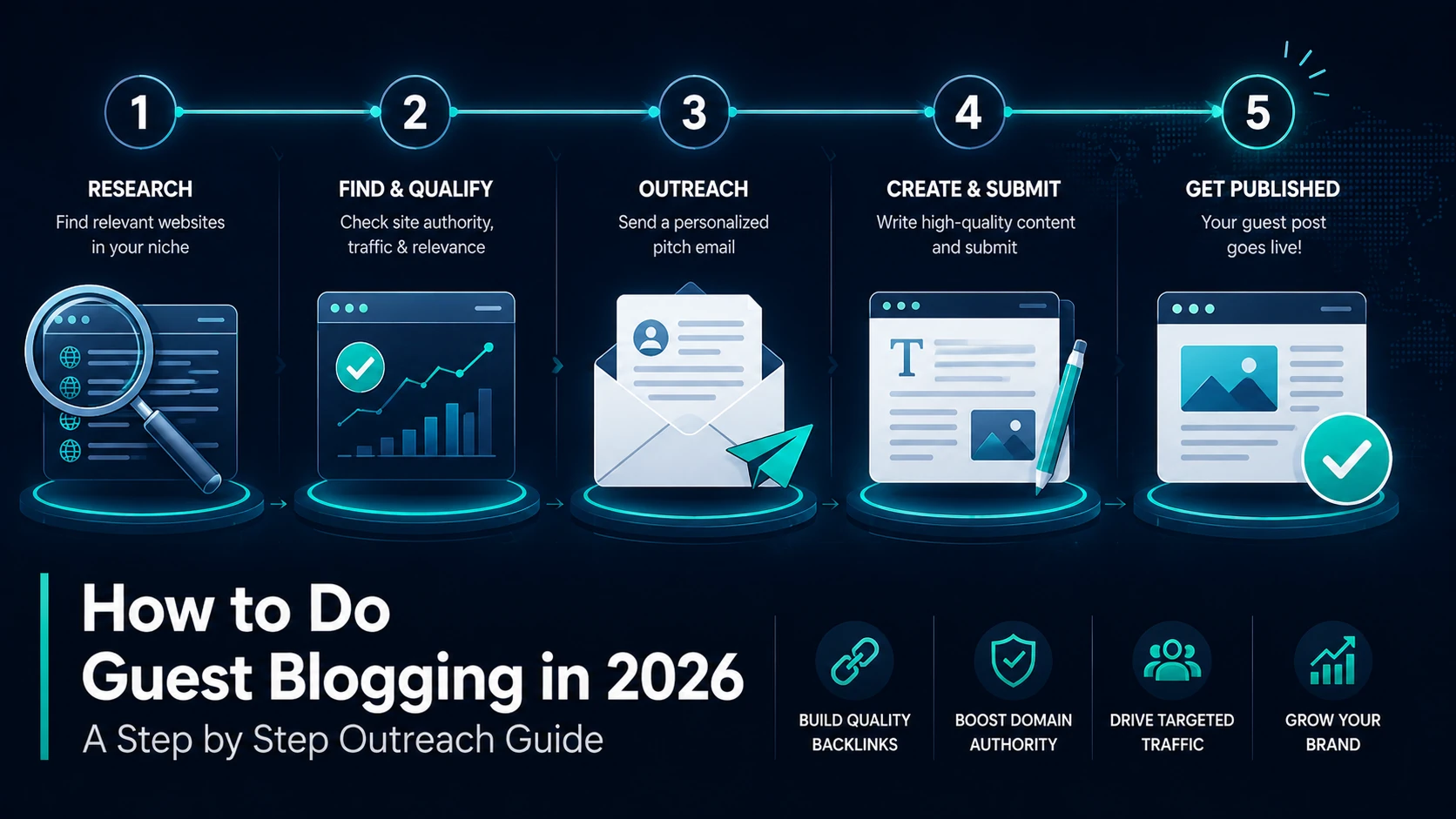
RankZ’s 2026 survey of over 400 SEO professionals found the average acceptable price for one high-quality backlink sits at 508.95 US dollars, yet a well-executed guest blogging pitch can earn the same placement for free on the right site. The gap between those two outcomes almost always comes down to process: a specific, well-targeted pitch consistently outperforms a generic one, regardless of budget. This guide walks through the exact steps that separate an accepted guest post pitch from one an editor deletes in five seconds.
Step One: Build a Targeted Site List, Not a Long One
Start with 15 to 20 sites that genuinely cover your topic area, rather than 100 sites pulled from a generic list. For each site, note its real organic traffic, its typical article length and tone, and whether it has published contributor content in the last three months. Sites that have gone quiet on guest content, even if they technically accept pitches, are a poor use of outreach time.
Step Two: Find the Right Editor, Not a Generic Inbox
A pitch addressed to a named editor or content manager gets meaningfully better response rates than one sent to a generic submissions@ address, since it signals real research rather than a mass email blast. Most sites list an editor or contributor lead on an About or Contributor Guidelines page; when they do not, a quick search of the site’s byline pattern usually surfaces the right contact on LinkedIn.
Step Three: Pitch Three Specific Angles, Not One Vague Topic
Editors reject vague pitches like write about AI trends far more often than specific ones like a 900-word breakdown of how mid-market SaaS companies are actually using AI agents in customer support, with two named case studies. Send three tightly scoped angle options in a single, short email, each with a one-sentence explanation of why the publication’s specific audience needs it now.
| Step | What to Do | Common Mistake to Avoid |
| 1. Build the list | Target 15 to 20 genuinely relevant sites | Pulling a 100-site generic guest post list |
| 2. Find the editor | Name a real person in the pitch | Emailing a generic submissions inbox |
| 3. Pitch angles | Offer three specific, scoped topic ideas | Pitching one vague, broad topic |
| 4. Write the draft | Match the site’s tone and length exactly | Submitting a generic, reused article |
| 5. Follow up once | Send one polite follow-up after 7 to 10 days | Following up repeatedly or not at all |
Step Four: Write to the Publication’s Actual Standard
Read the last five articles the site published before writing a word, and match sentence length, tone, and structure as closely as possible. Include one or two data points, named sources, or examples per section rather than generic advice, since publications increasingly reject contributor content that reads as filler rather than genuine expertise.
Step Five: Handle the Follow-Up and the Link Placement Correctly
Send exactly one polite follow-up seven to ten days after your initial pitch if you have not heard back, and then move on rather than repeatedly emailing. Once accepted, confirm the anchor text and destination URL in writing before publication, and check the live link within 48 hours to make sure it published as agreed and is not set to no-follow if a do-follow link was part of the agreement.
This exact process, targeted list, named editor, specific pitch, matched tone, applies directly when pitching WritoryBuzz. Review the WritoryBuzz contributor guidelines and submit a pitch here if your expertise covers technology, AI, fintech, cybersecurity, or business strategy.
Process Beats Volume Every Time
Guest blogging in 2026 rewards the same discipline it always has: real research on the target site, a specific pitch, and content written to match that publication’s actual standard. Five accepted pitches built this way will outperform fifty generic ones sent to an unfiltered list, every single time.
FAQs: Guest Blogging Process Questions
How do I start guest blogging in 2026?
Start by building a targeted list of 15 to 20 sites genuinely relevant to your industry, checking each for real organic traffic and recent contributor content. Then identify a named editor or content lead rather than a generic inbox, and prepare three specific, scoped pitch angles rather than one broad topic idea.
What should a guest blogging pitch email include?
A strong guest blogging pitch email includes a personalized greeting to a named editor, three specific and tightly scoped topic angles, a one-sentence reason each angle fits that publication’s audience, and a brief note on your relevant expertise. Keep the entire email under 150 words, since editors receive dozens of pitches weekly and respond better to concise, specific outreach.
How long does guest blogging outreach take to show results?
Most guest blogging campaigns need 3 to 6 months of consistent outreach before showing measurable ranking movement, since both editor response times and search engine indexing take time. A realistic pace is 5 to 10 quality placements per month across a mix of authority tiers, tracked over a 6 to 12 month window.
What is a good guest post acceptance rate to expect?
Acceptance rates vary sharply by site authority: RankZ’s 2026 research found only 5 to 10 percent of pitches get accepted at Domain Rating 50 plus sites, while mid-tier and niche blogs often accept 20 to 40 percent of well-targeted pitches. A targeted, researched pitch consistently outperforms these averages compared with a generic mass email.
What are common mistakes in guest blogging outreach?
The most common mistakes are pitching a vague topic instead of specific angles, emailing a generic submissions inbox instead of a named editor, submitting content that does not match the site’s actual tone or length, and following up too aggressively or not at all. Each mistake independently reduces acceptance rates, and combined they explain most rejected pitches.
How do I follow up on a guest blogging pitch?
Send exactly one polite follow-up email seven to ten days after your initial pitch if you have not received a response, briefly restating your angle rather than repeating the full original pitch. If there is still no response after the follow-up, move on to the next target site rather than continuing to email the same editor repeatedly.
Treat Every Pitch Like the Only One You Are Sending
The guest bloggers earning consistent placements in 2026 are not sending more pitches than everyone else. They are sending fewer, better-researched ones to editors who can tell the difference, and that difference is what actually builds a durable backlink profile.