Home
Categories
Free Tools
Write For UsAbout UsContact

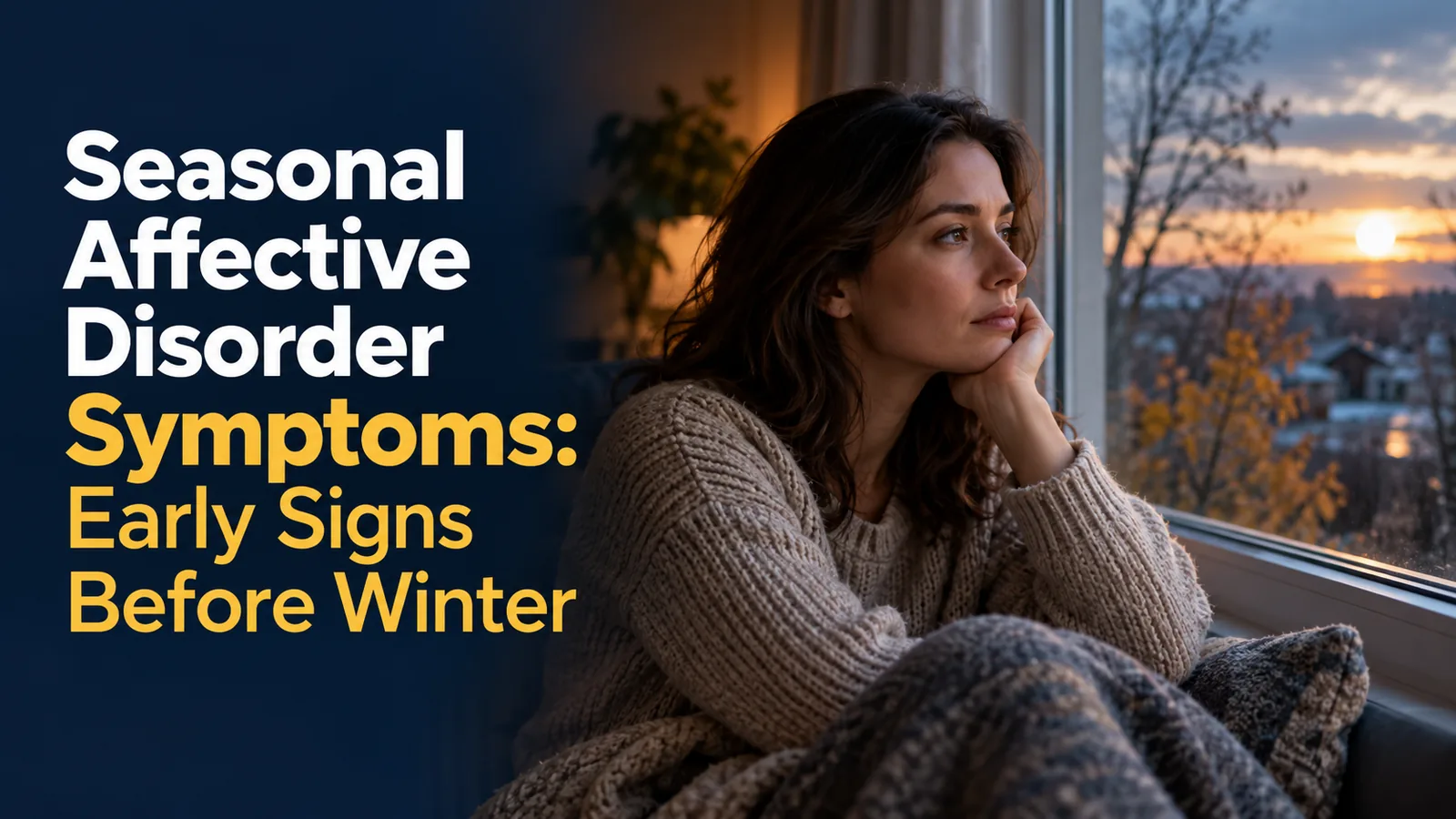
Seasonal Affective Disorder Symptoms: Early Signs Before Winter

Seasonal affective disorder symptoms and early signs before winter: low mood, oversleeping, carb cravings and withdrawal, who is at risk and when to...

October 29, 2026 Updated November 4, 2026 6 min read
Seasonal Affective Disorder Symptoms: Early Signs Before Winter

Key takeaways

  • SAD is a type of depression with a recurring seasonal pattern; symptoms usually last about 4 to 5 months a year.
  • Winter-pattern symptoms include oversleeping, overeating with carbohydrate cravings and social withdrawal.
  • General depression symptoms include low mood for at least two weeks, loss of interest and trouble concentrating.
  • NIMH says SAD is far more common in women and begins most often in young adulthood.
  • Treatments include light therapy, psychotherapy, antidepressants and, with mixed evidence, vitamin D.

The National Institute of Mental Health describes seasonal affective disorder as a type of depression with a recurrent seasonal pattern, with symptoms that usually last about 4 to 5 months a year. Most cases are winter-pattern, which means the time to notice early signs is now, as days shorten, not in January.

This guide to seasonal affective disorder symptoms follows NIMH’s publication (NIH Publication No. 23-MH-8138, revised in 2023). It explains the early signs, the winter-pattern symptoms, who is at risk and what treatments exist. This is general information, not a diagnosis. If you have thoughts of suicide, call or text 988 in the US, or contact your local emergency or crisis services.

What Seasonal Affective Disorder Is

NIMH defines SAD as a type of depression characterised by a recurrent seasonal pattern. Most cases are winter-pattern, and summer-pattern SAD is less common. The symptoms usually last about four to five months a year.

That makes it different from a brief dip in mood. The pattern repeats each year and affects daily life.

Early Signs to Watch For

NIMH lists general depression symptoms that can appear in SAD, and adds winter-pattern symptoms. Early signs often show up as a change from your usual self.

TypeSigns (NIMH)
MoodFeeling sad, anxious or empty for at least two weeks; hopelessness; irritability; guilt or worthlessness
Interest and energyLoss of interest in activities; low energy; trouble concentrating
BodyChanges in sleep, appetite or weight; unexplained aches or digestive problems
Winter-patternOversleeping; overeating with carbohydrate cravings and weight gain; social withdrawal, sometimes called hibernating
Most seriousThoughts of death or suicide

If you notice a combination of these signs repeating each autumn, write down dates and symptoms to share with a professional.

Who Is More at Risk

NIMH says SAD is far more common in women than men, and most cases begin in young adulthood. Risk is higher in northern regions with shorter winter days, such as Alaska and New England. It is also more common in people with depression or bipolar II disorder, and it sometimes runs in families.

Risk factorNIMH detail
SexMore common in women
AgeMost cases begin in young adulthood
LocationHigher in northern regions with short winter days
Health historyDepression or bipolar II disorder
FamilySometimes runs in families

Treatments That Exist

NIMH lists four options, used alone or together. Only a professional can advise which suits you.

TreatmentNotes (NIMH)
Light therapyDaily session with a bright light box for winter-pattern SAD
PsychotherapyIncluding CBT adapted for SAD
Antidepressant medicationIncludes extended-release bupropion, FDA-approved to help prevent seasonal episodes
Vitamin DStudy results are mixed

Healthy habits help alongside treatment. Our guides on sleeping better tonight and building a fitness habit that sticks may support routine.

When to Get Help

NIMH says to talk to a health care provider or mental health specialist if you notice symptoms. A questionnaire may be used to check whether you meet the diagnostic criteria. If you have thoughts of suicide, call or text 988 in the US or chat at 988lifeline.org, and call emergency services in an emergency. Outside the US, contact your local crisis service.

For wider context on stress, see our guide to the signs of chronic stress, and consider mental health days when you need them.


Related readImmunity Boosting Foods for Winter: What Works and What Is HypeRead →

Free tools for Health

FAQs

What are the early signs of seasonal affective disorder?

NIMH lists low mood lasting at least two weeks, loss of interest, low energy, trouble concentrating and changes in sleep, appetite or weight. Winter-pattern signs include oversleeping, carbohydrate cravings with weight gain and social withdrawal. If these return each autumn or winter, speak to a health professional. Keeping a short diary of mood, sleep and appetite for a few weeks gives your doctor a clearer picture than memory alone does.

Is seasonal affective disorder the same as the winter blues?

They overlap, but NIMH describes SAD as a type of depression with a recurrent seasonal pattern and symptoms lasting about four to five months a year. Mild winter blues are common and less severe. If low mood affects work, sleep or relationships, a professional can assess whether it is SAD. The difference is often how long symptoms last, how strongly they affect your day and whether they return every year at the same time.

Who is most likely to get SAD?

NIMH says SAD is far more common in women than men and most cases begin in young adulthood. Risk is higher in northern regions with shorter winter days, in people with depression or bipolar II disorder and in those with a family history. Anyone can be affected, though. Having a risk factor does not mean you will get SAD, and many people with no risk factors are affected, so the key is awareness of your own pattern.

How is seasonal affective disorder treated?

NIMH lists light therapy with a bright light box, psychotherapy including CBT adapted for SAD, antidepressant medication such as extended-release bupropion, and vitamin D, though vitamin D study results are mixed. A professional can help you choose a plan. Treatment is individual, so ask about benefits and side effects, and do not start or stop medication or buy a light box without talking to a professional.

When should I see a doctor?

See a health care provider or mental health specialist if you notice symptoms, especially if they last two weeks or longer, repeat each year or affect daily life. NIMH says a questionnaire may be used for diagnosis. Seek urgent help immediately if you have thoughts of suicide. You can bring a trusted person with you, and write down your symptoms beforehand, so you do not forget details when you are talking.

Can summer cause SAD too?

Yes, but it is less common. NIMH says most cases are winter-pattern and summer-pattern SAD is less common, and that no treatments are specific to summer-pattern SAD. Light therapy and vitamin D are for winter-pattern SAD. If you notice a seasonal pattern in summer, speak to a professional. If you have noticed a pattern in your own summers, track it just as you would in winter and mention it to your doctor at the next visit.

Notice Early, Act Early

The most helpful thing you can do before winter is pay attention to your own pattern. If past winters have felt heavier, you do not have to wait until you are struggling.

Make a note of the first signs, tell someone you trust and book an appointment if your mood dips for two weeks. Getting help early is a practical step, not a weakness.

Sources: National Institute of Mental Health: Seasonal affective disorder

Was this guide helpful?
Jinal Mistry
Written by

Jinal Mistry

Jinal Mistry is the Founder of WritoryBuzz and an SEO & Digital Growth Specialist with 5+ years of experience in Technical SEO, AI SEO, International SEO, and organic growth strategy. She helps businesses improve search visibility through data-driven SEO, content optimization, search experience enhancement, and AI-focused search strategies.Having worked with clients across multiple industries and international markets, Jinal specializes in building sustainable organic growth through technical excellence, user-focused optimization, and future-ready digital marketing practices. Through WritoryBuzz, she shares insights on SEO, AI search, content strategy, digital marketing, and emerging search trends to help businesses and marketers stay ahead in the evolving digital landscape.

More from this author

Keep exploring

Have expertise to share? Write for WritoryBuzz.Read the guidelines and send us your pitch.
Become a contributor
Free tools

63 free tools for writers, SEOs and developers

Open one in your browser and start. Nothing to install, and your text stays on your device.

PrivateInstant resultsNo sign up
Write for us

Have expertise to share?

  • Original, well researched guides
  • Reviewed by our editors
  • 29 categories to publish in
Submit a guest post
© 2026 WritoryBuzz. All rights reserved.Back to top