
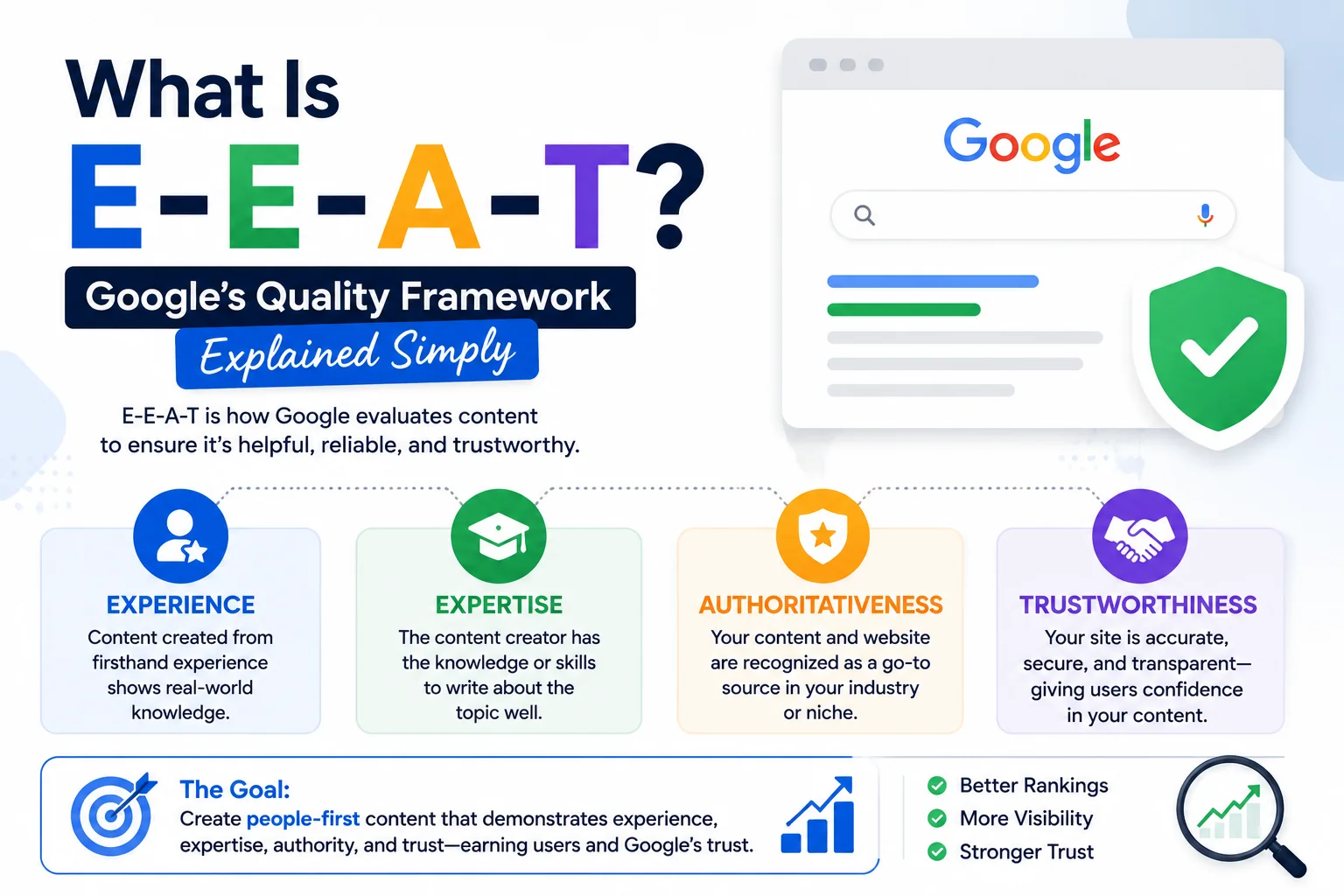
E-E-A-T shows up constantly in SEO advice, yet a genuinely clear, plain explanation of what it actually means is surprisingly hard to find. E-E-A-T stands for Experience, Expertise, Authoritativeness, and Trustworthiness, the framework Google’s own Search Quality Rater Guidelines use to describe what separates genuinely high-quality content from content that merely looks acceptable on the surface. This guide breaks down each component in plain terms, using the free tools available on WritoryBuzz’s tools page, and shows how to check where your own content currently stands.
Experience: Has the Author Actually Done This?
Experience specifically asks whether the content creator demonstrates genuine, first-hand involvement with the topic, actual product testing, direct professional experience, or personal history with the subject, rather than content assembled purely from research without this underlying direct engagement.
Expertise: Does the Author Actually Know This?
Expertise refers to more traditional signals, relevant credentials, professional background, and demonstrated subject matter knowledge, evaluated somewhat differently depending on the topic, a medical article warrants formal medical expertise while a product review warrants genuine hands-on product knowledge instead.
Authoritativeness: Is This Source Recognized as a Genuine Reference?
Authoritativeness asks whether other credible sources, other websites, industry publications, recognized experts, treat this specific source as a genuine reference point within its field, a signal built over time through consistent, high-quality output rather than something a single piece of content can establish on its own.
Trustworthiness: Is the Content Accurate and Honest?
Trustworthiness is the foundational component the other three build upon, since even content demonstrating strong experience, expertise, and authoritativeness provides limited value if it is not genuinely accurate, transparent, and honest. Checking a specific page against all four components at once is possible with a free eeat checker rather than manually guessing at how each component applies.
| Component | What It Evaluates | Example Signal |
| Experience | First-hand involvement with the topic | Genuine product testing, personal history |
| Expertise | Relevant knowledge and credentials | Author bio, professional background |
| Authoritativeness | Recognition from other credible sources | Citations, mentions, industry reputation |
| Trustworthiness | Accuracy, transparency, and honesty | Clear sourcing, factual accuracy, no misleading claims |
Why This Framework Matters More for Certain Topics
Google applies particularly heightened E-E-A-T scrutiny to YMYL, your money or your life, content specifically, health, financial, and legal topics where inaccurate information carries genuine, significant real-world consequence, meaning these particular topic areas warrant especially careful attention to all four components rather than treating E-E-A-T as an equally weighted concern across every possible content category.
Where E-E-A-T and AEO Genuinely Connect
The same expertise and trust signals E-E-A-T evaluates also directly influence whether AI answer engines choose to cite a page, meaning improving E-E-A-T supports both traditional search quality and the newer citation-based visibility a aeo checker specifically evaluates, rather than these being two entirely separate, disconnected optimization efforts.
Getting Started With Your Own Content
Adding genuine author bios establishing real credentials, backing claims with specific, verifiable detail, and confirming a website’s schema markup properly identifies authorship and organization information through a schema markup generator together address the practical, actionable side of this framework most content teams can start implementing immediately.
Run your own highest-priority pages through a free eeat checker to see exactly where they currently stand, then explore WritoryBuzz’s full quality and SEO toolkit for the complete set of tools referenced throughout this guide.