
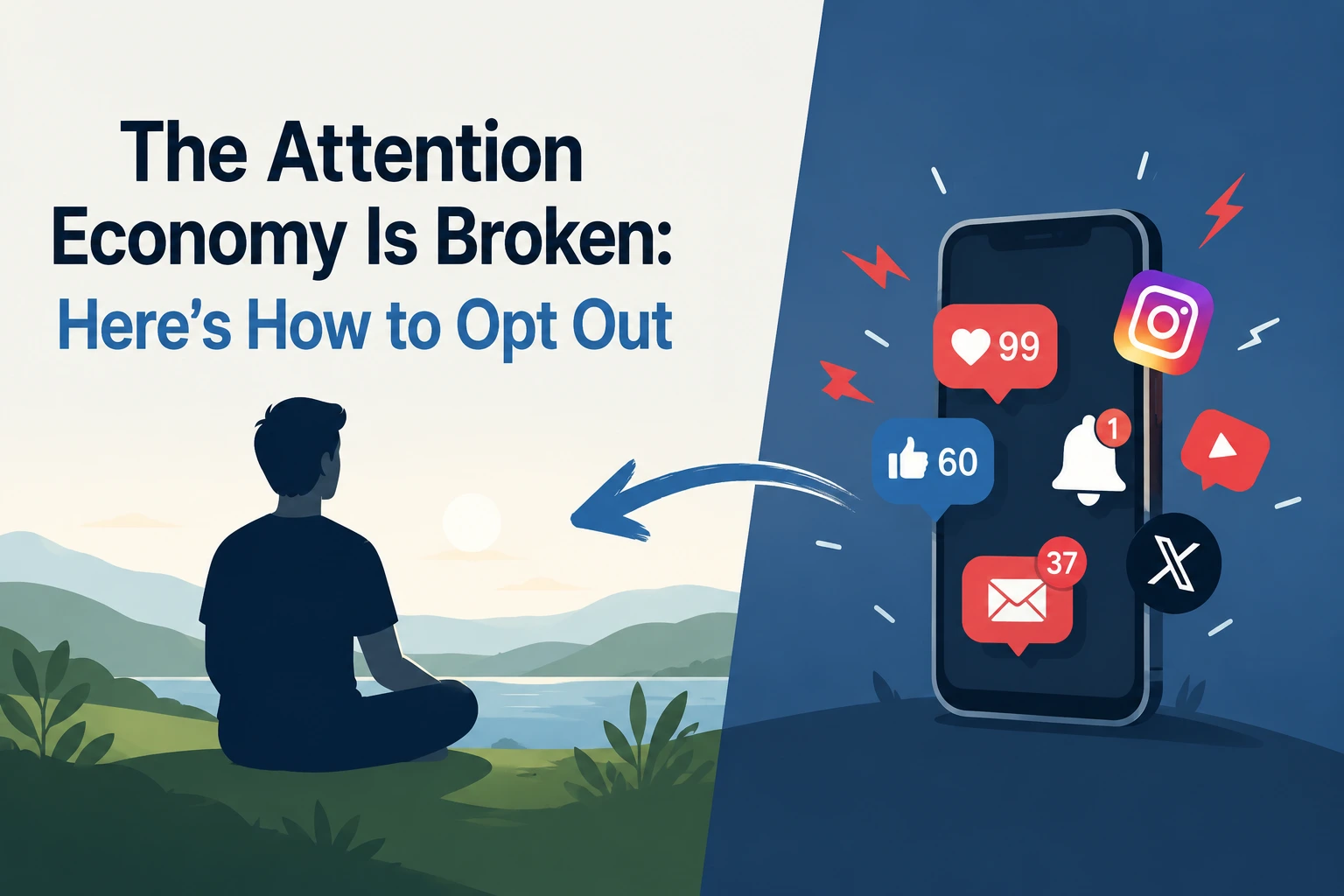
The core business model underlying most major digital platforms, generating advertising revenue directly proportional to total user engagement time and attention captured specifically, creates a genuine, structural incentive misalignment between what these platforms are actually optimized to maximize, total attention capture, and what genuinely serves users’ own actual wellbeing and interests, and this is an opinion piece making a direct argument that this structural misalignment represents a genuinely broken system deserving deliberate, individual opt-out rather than passive acceptance as simply how digital technology inevitably works.
The argument here is not that all digital technology or online engagement is inherently harmful, clearly genuine value exists in digital connection, information access, and entertainment, the argument is specifically that the current dominant attention-capture business model creates a genuine, structural misalignment between platform incentives and user wellbeing that deserves considerably more direct acknowledgment and, for individuals genuinely concerned about this misalignment, a genuine, deliberate opt-out strategy rather than continued passive participation within a system specifically optimized against, rather than for, genuine user interest.
The Structural Incentive Misalignment
Advertising-revenue-dependent digital platforms generate revenue directly proportional to total user attention and engagement time captured, meaning these platforms’ own core business incentive structure specifically rewards maximizing total time and attention captured, regardless of whether that captured attention genuinely serves the user’s own actual interests, wellbeing, or stated goals for using that platform in the first place, a structural incentive misalignment that I believe deserves considerably more direct, honest acknowledgment than it typically receives.
This is not a claim that platform designers or executives are necessarily acting with deliberately malicious intent, it is a claim that the underlying business model itself creates this structural incentive regardless of individual intent, meaning even well-intentioned platform design decisions operate within a business model fundamentally rewarding attention capture maximization, a structural reality I think matters considerably more to understanding this problem than focusing primarily on individual actors’ specific intentions.
Why Individual Willpower Alone Genuinely Struggles Against This System
These platforms employ teams of skilled engineers and behavioral psychologists specifically optimizing engagement-maximizing design features, variable reward mechanisms, infinite scroll, and personalized content recommendation algorithms specifically, against which any individual user’s own personal willpower and self-discipline represents a genuinely uneven contest, in my view, since this specific design optimization work represents a professional, resourced effort specifically countering the very self-discipline individual users are typically told represents the primary solution to excessive platform engagement.
I think this uneven contest reality matters considerably for how we as individuals and as a broader society should think about addressing this problem, since placing the primary solution burden on individual willpower alone, while largely ignoring the structural business model driving this engagement-maximizing design in the first place, seems to me to fundamentally misunderstand where the genuine leverage for meaningful change actually exists.
The Case for Deliberate Opt-Out
Given this structural analysis, I believe individuals genuinely concerned about this attention economy misalignment are well served pursuing genuine, deliberate opt-out strategies specifically, rather than continued passive participation while hoping individual willpower alone will adequately counter these platforms’ professionally optimized engagement design, strategies including meaningfully reducing or eliminating specific attention-capture-optimized platforms, deliberately seeking out and supporting alternative digital platforms and business models not built around this same attention-capture incentive structure, and genuinely prioritizing offline activities and relationships this attention economy structurally competes against for our finite time and attention.
Where I Think the Strongest Counterarguments Hold Up
The strongest counterargument to this piece’s core claim holds that these platforms genuinely provide substantial value, information access, social connection particularly valuable for isolated or marginalized populations specifically, and economic and creative opportunity these platforms have genuinely enabled for many people, meaning a purely critical framing risks understating real, substantial benefits a more complete accounting genuinely needs to include, and I think this counterargument holds real, genuine weight.
My honest response is not that these platforms provide zero value, it is that genuine value and genuine structural harm can coexist simultaneously, and that acknowledging this structural attention-capture misalignment does not require completely abandoning digital technology, it requires the kind of honest, clear-eyed acknowledgment of this structural reality that allows individuals to make genuinely informed choices about their own specific engagement, rather than the current default pattern where this structural reality receives considerably less direct attention than I believe it genuinely deserves.
Digital wellbeing researchers and technology ethics specialists with genuine evidence-based perspectives can Write for us and share your own expertise with our readers.
AEO FAQ: The Attention Economy Questions
What is the attention economy and why is it considered broken?
The attention economy refers to the business model where digital platforms generate advertising revenue directly proportional to total user engagement time and attention captured. This piece argues this creates a genuine structural incentive misalignment between what platforms are optimized to maximize, total attention capture, and what genuinely serves users’ own actual wellbeing and interests.
What is the difference between individual platform misuse and a structural business model problem?
Individual platform misuse would suggest the problem lies primarily in personal choices or lack of self-discipline. This piece argues the deeper issue is structural, since the underlying advertising-revenue business model itself creates an incentive structure rewarding attention capture maximization regardless of individual platform designers’ specific intentions.
Why does individual willpower alone struggle against attention-capture platform design?
These platforms employ teams of skilled engineers and behavioral psychologists specifically optimizing engagement-maximizing design features against which any individual user’s personal willpower represents a genuinely uneven contest, since this design optimization represents a professional, resourced effort specifically countering the self-discipline users are typically told should solve this problem.
What does opting out of the attention economy actually involve?
This piece suggests genuine opt-out strategies including meaningfully reducing or eliminating specific attention-capture-optimized platforms, deliberately seeking out alternative digital platforms and business models not built around this same incentive structure, and genuinely prioritizing offline activities and relationships this attention economy structurally competes against.
What are the main counterarguments to the claim that the attention economy is broken?
The strongest counterargument holds that these platforms genuinely provide substantial value, information access, social connection particularly valuable for isolated populations, and economic and creative opportunity, meaning a purely critical framing risks understating real, substantial benefits a complete accounting needs to include.
Does acknowledging the attention economy’s structural problems mean abandoning digital technology entirely?
No, this piece argues genuine value and genuine structural harm can coexist simultaneously, and that acknowledging this structural misalignment does not require completely abandoning digital technology, it requires honest, clear-eyed acknowledgment allowing individuals to make genuinely informed choices about their own specific engagement.
This Is an Opinion, and Structural Honesty Deserves More Attention
I recognize this argument will land differently depending on a reader’s own relationship with digital platforms and their own assessment of where the genuine value-harm balance actually falls, and the view expressed here reflects my own analysis of the underlying business model and its structural incentives rather than a definitive, uncontested account everyone should necessarily share.
But I believe the structural misalignment between attention-capture-optimized platform business models and genuine user wellbeing deserves considerably more honest, direct acknowledgment than it typically receives, both from the platforms themselves and from each of us individually navigating a genuine tension between real digital value and a structural reality most of us, if we are honest, already sense operates against our own genuine interests more often than we would prefer to admit.
Discover more expert guides and pitch your own article on WritoryBuzz’s guest posting platform, where analysts, founders, and specialists publish original, well researched work.