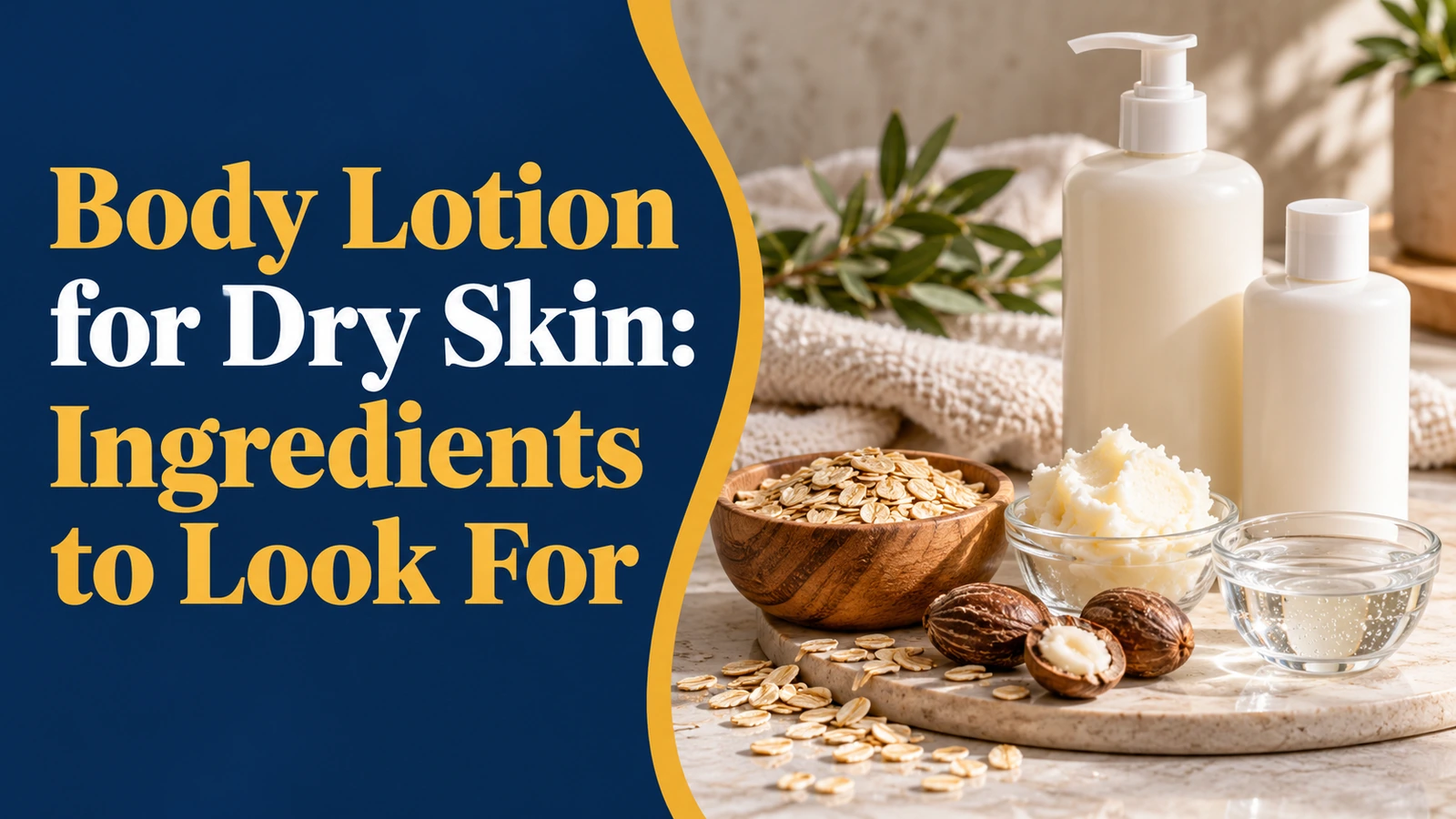
The American Academy of Dermatology advises people with dry skin to use a cream or ointment rather than a lotion, apply it when skin is damp, keep baths and showers to 5 to 10 minutes in warm water and choose gentle, fragrance-free products. That advice surprises many shoppers, because the most searched product is the lotion. The choice is not wrong, but the label on the bottle matters less than what is inside it and how thick it is.
This guide explains the ingredients to look for in a body lotion for dry skin, how lotions, creams and ointments differ, what to avoid, how to apply them and when dryness needs a doctor. It is general information and not medical advice.
Why Skin Gets Dry, and Why Weather Makes It Worse
The American Academy of Dermatology advises protecting dry skin from cold and sun and adding humidity with a humidifier, and Mayo Clinic advises avoiding long, hot showers and using a humidifier, which points to hot water and dry indoor air as common triggers. Mayo Clinic also notes that dryness can sometimes be a sign of a condition such as atopic dermatitis or psoriasis. As autumn begins and heating comes on, indoor air tends to get drier.
That is why a routine matters more than a single product. The best body lotion for dry skin only helps if bathing habits, fabrics and humidity are not working against it.
Lotion, Cream or Ointment: Which Is Best for Dry Skin?
The American Academy of Dermatology specifically suggests a cream or ointment rather than a lotion for moisturising dry skin. Mayo Clinic adds that for very dry skin, thicker creams, oils or petrolatum-based products may work better.
| Type | Texture | Best for | Trade-off |
|---|---|---|---|
| Lotion | Thin, pours easily, contains more water | Mild dryness, warm weather, large areas | May need frequent reapplication |
| Cream | Thicker, holds shape in a jar | Moderate to dry skin | Can feel richer |
| Ointment | Greasy, petrolatum-based | Very dry or cracked skin | Can feel heavy and stain clothes |
If you prefer a lotion, choose a richer one with the ingredients below, apply it generously and add a cream on the driest areas such as elbows, shins and heels.
Ingredients to Look for in a Body Lotion for Dry Skin
Moisturisers usually combine three kinds of ingredient: humectants that attract water, emollients that smooth and soften, and occlusives that seal moisture in. Dermatologists name several specific ingredients.
| Ingredient | Type | Who recommends it | What it does |
|---|---|---|---|
| Glycerin | Humectant | AAD and Mayo Clinic | Draws water into the skin |
| Urea | Humectant | Mayo Clinic | Helps hold moisture |
| Ceramides | Emollient | Mayo Clinic | Support the skin barrier |
| Fatty acids | Emollient | Mayo Clinic | Soften and smooth |
| Shea butter or cocoa butter | Emollient | AAD and Mayo Clinic | Soften and add richness |
| Petrolatum | Occlusive | AAD and Mayo Clinic | Seals moisture in |
| Dimethicone | Occlusive | AAD | Forms a protective layer |
| Lanolin | Occlusive | AAD | Seals and softens |
Hypoallergenic and Noncomedogenic Labels
Mayo Clinic notes that hypoallergenic products are less likely to cause irritation and noncomedogenic products are less likely to clog pores. Both labels can help if you are prone to breakouts on the chest and back, though neither is a guarantee.
Ingredients and Habits to Avoid
The American Academy of Dermatology suggests avoiding fragrance, alcohol (except hand sanitiser), deodorant soaps and retinoids on very dry skin, and checking before using anti-itch products because many can make dryness and itching worse. Mayo Clinic suggests avoiding products with sodium lauryl sulfate.
How to Use Body Lotion for Best Results
| Step | What to do |
|---|---|
| 1 | Shower in warm, not hot, water and keep it to 5 to 10 minutes |
| 2 | Pat the skin dry instead of rubbing |
| 3 | Apply moisturiser while skin is still damp |
| 4 | Massage in gently, focusing on elbows, knees, shins and feet |
| 5 | Reapply when skin feels tight, especially after washing hands |
| 6 | Use a humidifier and keep it clean |
Both the American Academy of Dermatology and Mayo Clinic recommend limiting bath time and using a humidifier to add moisture to indoor air. Wearing soft, loose cotton also helps, because rough wool or polyester can irritate dry skin.
Build a Simple Dry-Skin Routine
A gentle cleanser, a thick moisturiser, sunscreen on exposed skin and a quick reapplication at night are enough for most people. Our beginner skincare routine walks through the face basics. If you are shopping on a budget, our list of the best drugstore skincare products is a good place to start.
When to See a Dermatologist
The American Academy of Dermatology advises seeing a dermatologist if dryness persists, since it can signal conditions such as atopic dermatitis, psoriasis or kidney disease. Mayo Clinic also suggests an appointment if self-care does not relieve the dryness or symptoms get worse. Seek care for cracked, bleeding or very itchy skin, and do not apply new products over broken skin without advice.