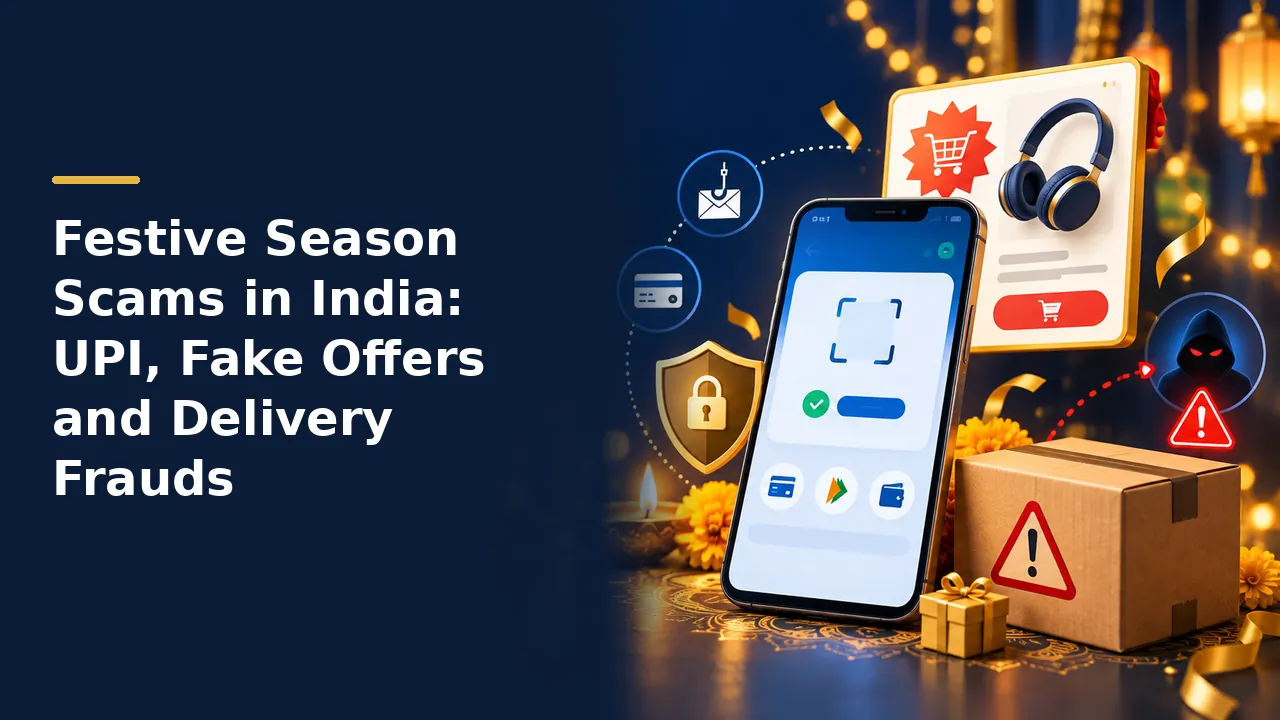
India’s reported cyber-security incidents more than doubled from 10.29 lakh in 2022 to 22.68 lakh in 2024, according to a PIB report cited by Fact Crescendo. The festive season is when many of those attempts peak, because shoppers are rushing, comparing deals and clicking on links they would normally question. Madhya Pradesh Cyber Cell warned residents in September 2025 that scammers were using festive offers around Karwa Chauth and Diwali to empty bank accounts.
October is also Cybersecurity Awareness Month, which makes this the right time to learn the patterns. This guide covers festival scams in India, from fake sale ads and UPI fraud to delivery scams, fake loan apps and digital arrest calls. It shows the red flags, a safer way to shop, and what to do in the first hour if you are hit.
Why Festival Scams in India Spike Around Diwali
Scammers follow attention. When millions of people are looking for offers, gift ideas and delivery updates at the same time, a fake message blends in. The Madhya Pradesh Cyber Cell, quoted by The Hitavada, said fraudsters advertise fake sales with 50 to 80 percent discounts on Facebook, WhatsApp, Instagram and Telegram, then send victims to fake shopping websites.
The pressure also helps them. Limited-time countdowns, last-day offers and a rush to get gifts delivered before Dhanteras on November 6 push people to act before they check. That is the moment a scam works.
Fake Offer and Fake Sale Scams
These are the most common festive frauds. A post or message shows a famous brand with a huge discount and a short deadline. The link leads to a site that looks real but is built to capture your card details and OTP.
How the Fake Sale Scam Works
According to the Cyber Cell alert, scammers often impersonate big names such as Amazon, Flipkart and Myntra. Once you enter card numbers, OTPs or personal data, they use it to drain the account. Some sites also deliver nothing, or a cheap item, after taking payment.
Red Flags of a Fake Offer
| Red flag | What it usually means |
|---|---|
| Discount of 50 to 80 percent on a premium brand | Bait to create urgency |
| Link shared by an unknown number or forwarded message | Phishing site |
| Website address with odd spelling or extra words | Cloned site |
| Payment only by direct transfer or unfamiliar app | No buyer protection |
| Request for OTP or card PIN to claim a prize | Credential theft |
Our guide to AI-driven phishing attacks explains why even polished messages can be fake, which is worth reading before the sale rush.
UPI Fraud During the Festive Season
UPI makes payments instant, which is exactly why fraudsters like it. Most UPI scams do not break the system; they trick the person into approving a payment or revealing a PIN.
Common UPI Fraud Patterns
In a collect-request scam, a stranger sends a payment request that looks like money coming in, and the victim enters the PIN, which sends money out. In a QR scam, the victim is asked to scan a code to receive a refund or prize, and the scan sends money instead. In a fake customer care scam, a number found through a search result tricks the victim into sharing details.
A Simple UPI Safety Rule
Treat your UPI PIN like an ATM PIN: you enter it to send money, never to receive it. If any screen asks for a PIN when you expect to receive money, stop. This is general safety guidance, and your bank or payment app publishes the official steps for blocking a transaction.
For stronger everyday protection, a password manager and two-step login on your payment and email accounts help. We compare the leading tools in our best password managers for 2026.
Delivery, Gift Card and Fake Loan Scams
Delivery and Courier Scams
A text claims your parcel is stuck and asks for a small fee or a click on a tracking link. Real couriers do not ask for card details over SMS. Open the retailer’s app or website directly to check order status instead of using the link.
Free Coupon and Gift Card Scams
The Cyber Cell advice quoted by The Hitavada is to delete messages offering free coupons or gift cards from unknown numbers and avoid clicking unknown links on social media.
Fake Loan Apps and Digital Arrest Calls
The same report describes a Bhopal woman who lost 15 lakh rupees through a fake loan app run through foreign call centres and internet cafes. It also describes digital arrest scams, where fraudsters pose as government officials and intimidate victims into paying. No genuine agency demands payment over a video call.
| Scam type | Typical hook | Safer response |
|---|---|---|
| Delivery fraud | Parcel held, pay a fee | Check the retailer’s app directly |
| Free coupon or gift card | Prize from an unknown number | Delete, do not click |
| Fake loan app | Quick loan with hidden fees | Use only regulated lenders |
| Digital arrest | Officials accuse you of a crime | Hang up, call 1930 if money is demanded |
How to Shop Safely This Diwali
Simple habits stop most scams. Type the retailer’s address yourself instead of tapping an ad. Check that the site address matches the brand you expect. Compare a surprising price with two other stores. Pay with a method that offers buyer protection where possible, and keep screenshots of orders.
Protect Your Accounts
Turn on two-step verification for email, banking and shopping accounts, and use a unique password for each. Small business owners who take festive orders online should also review the basics in our small business cybersecurity audit.
Shop Local When in Doubt
The Cyber Cell advice quoted by The Hitavada includes verifying a website before buying, shopping only on verified sites and considering local markets. Changing card PINs periodically and checking statements for suspicious activity also help.
What to Do If You Are Scammed
Speed matters because banks can sometimes act when a report is made quickly. The Cyber Cell advice is to call the 1930 helpline and file a complaint at the nearest cyber police station. The National Cyber Crime Reporting Portal also accepts complaints, according to Fact Crescendo’s summary of the PIB report.
| First hour step | Action |
|---|---|
| 1 | Call your bank and ask to block the card or account access |
| 2 | Call 1930, the helpline for financial cyber fraud |
| 3 | Take screenshots of messages, numbers and payment details |
| 4 | File a complaint with the cyber police or on the national portal |
| 5 | Change passwords and enable two-step login |
Do not delete evidence, and do not send more money to a person who promises to recover the loss. Recovery scams target victims twice.