Home
Categories
Free Tools
Write For UsAbout UsContact

Smartwatch vs Fitness Band: Which One to Buy for Daily Health Tracking

Smartwatch vs fitness band for daily health tracking: battery life, features, price, accuracy limits and who should buy which, plus a doctor caution.

October 27, 2026 6 min read
Smartwatch vs Fitness Band: Which One to Buy for Daily Health Tracking

Key takeaways

  • SlashGear says bands last far longer: Fitbit Charge 6 up to 7 days and Amazfit Active 2 about 10 days, against Apple Watch SE up to 18 hours.
  • Smartwatches run apps, make calls and add sensors, such as ECG and apnea features on the Apple Watch Series 10, per SlashGear.
  • Both track steps, heart rate and sleep; SlashGear cites a Fitbit Inspire 3 at 99.95 dollars and a Galaxy Watch 7 at 299.99 dollars.
  • ConsumerAffairs says experts call step counts and resting heart rate trends dependable, and sleep stages, blood oxygen and stress scores more variable.
  • Treat wearable data as a prompt to ask questions, not a diagnosis, and see a doctor about sudden or persistent changes.

SlashGear’s comparison of smartwatches and smart bands reports that the Fitbit Charge 6 lasts up to 7 days and the Amazfit Active 2 about 10 days, while the Apple Watch SE lasts up to 18 hours, the OnePlus Watch 3 about 5 days and the Garmin Venu 3 up to 14 days. Battery life is the clearest difference in the smartwatch vs fitness band debate.

This guide explains the difference between a fitness band and a smartwatch, compares battery, features and price, covers how reliable health readings are, and says who should buy which. It draws on SlashGear and a ConsumerAffairs report from January 2026. It is general information and not medical advice.

Smartwatch vs Fitness Band: The Core Difference

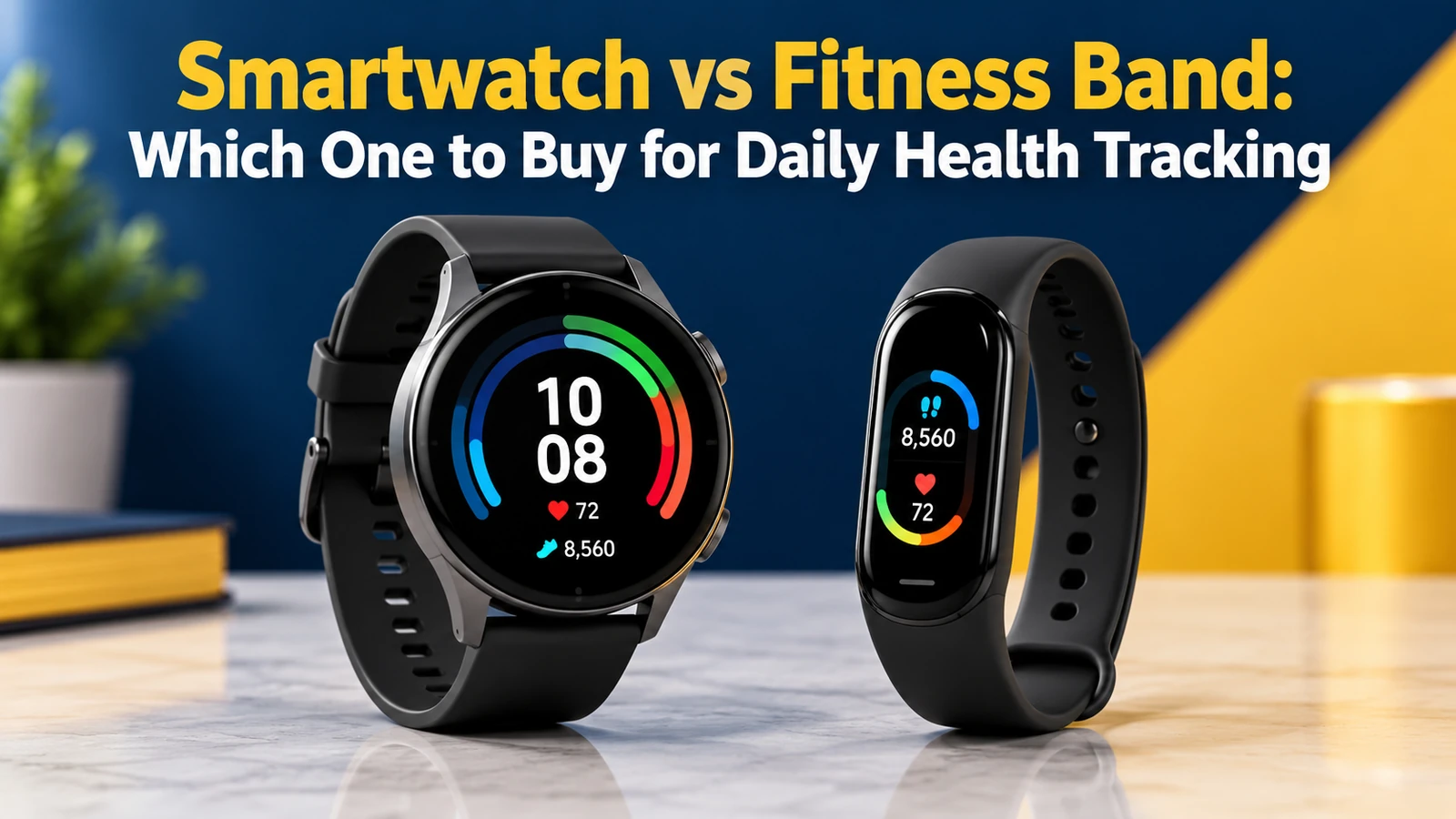
A fitness band is a slim, screen-light device built around tracking steps, heart rate, sleep and workouts. A smartwatch is a small computer on your wrist that also runs apps, shows notifications and can make calls.

SlashGear’s comparison makes the same split: both track steps, heart rate and sleep, but smartwatches add apps, calling and more advanced sensors. If daily health tracking is your only goal, a band covers the basics. If you want a phone companion too, a watch fits better.

Side-by-Side Comparison

Use this table as a rule of thumb. Models differ, so check the specifications of the exact device you are considering.

FactorFitness bandSmartwatch (SlashGear)
Battery lifeUp to 7 to 10 days in the examples citedFrom about 18 hours to 14 days, depending on model
Apps and callsLimitedApps, calls and notifications
SensorsBasic health trackingAdvanced options such as ECG and apnea features on some models
ScreenSmallLarger
Price examplesFitbit Inspire 3 at 99.95 dollarsGalaxy Watch 7 at 299.99 dollars

Prices change often, so confirm current prices and offers before you buy.

Battery Life Examples

SlashGear gives concrete examples. A long battery matters for sleep tracking, because you need to wear the device at night.

DeviceTypeBattery (SlashGear)
Amazfit Active 2Smart bandAbout 10 days
Fitbit Charge 6Smart bandUp to 7 days
Garmin Venu 3SmartwatchUp to 14 days
OnePlus Watch 3SmartwatchAbout 5 days
Apple Watch SESmartwatchUp to 18 hours

Battery life depends on use, screen brightness and features, so real-world results may differ from the claim.

How Accurate Is Daily Health Tracking

ConsumerAffairs, reporting in January 2026, quotes experts who say sleep stages, blood oxygen and stress scores are far more variable than other readings, because movement, fit, skin temperature and signal noise affect them. They called step counts and general activity tracking the most dependable, and resting heart rate trends useful over time.

MetricReliability (ConsumerAffairs experts)
Step count and activityMost dependable
Resting heart rate trendUseful over time
Sleep stagesFar more variable
Blood oxygenFar more variable
Stress scoreFar more variable

The same report lists things that can skew readings, such as cold weather, a loose fit, excess movement, darker tattoos under the sensor, dehydration and sleeping position.

Who Should Buy Which

Match the device to your habits, not the longest feature list.

If you areChooseReason
A beginner who wants steps, sleep and workoutsFitness bandSimple, long battery, lower price
A heavy phone user who wants notifications and appsSmartwatchMore features on the wrist
Tracking sleep every nightLong-battery band or watchFewer gaps in the data
An athleteSmartwatch with GPSTraining features and GPS
On a tight budgetBandLower entry price

If you train seriously, our guide to wearable tech for athletes covers what to look for. For deeper training data, see our article on athlete performance tracking.

Use the Data Wisely and Know When to See a Doctor

ConsumerAffairs reports experts advising you to treat wearable data as a warning sign and not a diagnosis, to speak to a professional about sudden or persistent changes such as irregular heart rhythms, unusual fatigue or breathing problems, and not to diagnose yourself from device readings.

Use the device to support habits, such as walking more and keeping a regular bedtime. Our guide to how to sleep better tonight is a practical companion. A wearable is not a medical device substitute, so see a doctor if you are worried.


Related readSeasonal Affective Disorder Symptoms: Early Signs Before WinterRead →

Free tools for Health

FAQs

What is the difference between a smartwatch and a fitness band?

A fitness band focuses on tracking steps, heart rate, sleep and workouts, with a small screen and a long battery. A smartwatch adds apps, calls, notifications and sometimes advanced sensors. SlashGear notes that both types track steps, heart rate and sleep. Think about which features you will use every week, such as notifications, music or payments, and be honest about whether a simpler and cheaper device would meet your real needs.

Which has better battery life, a smartwatch or a band?

Bands generally last longer. SlashGear cites the Fitbit Charge 6 at up to 7 days and the Amazfit Active 2 at about 10 days, against the Apple Watch SE at up to 18 hours. Some watches, such as the Garmin Venu 3 at up to 14 days, last longer. Real-world battery life depends on screen use, GPS and notifications, so read independent reviews, and remember that a device that dies mid-week leaves gaps in your data.

Which is better for sleep tracking?

A device with a long battery is easier to wear every night, which suits many bands and some watches. ConsumerAffairs reports experts saying sleep stages are far more variable than step counts, so use sleep data for trends and not as a verdict. If you want sleep insights, wear the device consistently for a few weeks before judging trends, and treat any one night’s score as a rough guide only.

Are smartwatch health readings accurate?

Some are more reliable than others. ConsumerAffairs reports experts calling step counts the most dependable and resting heart rate trends useful over time, while sleep stages, blood oxygen and stress scores are far more variable. Fit, movement and skin conditions can skew readings. Wearing the device snugly and consistently can improve readings, but even then, treat the numbers as a trend rather than a precise measurement or a medical result.

Should I buy a smartwatch or band as a beginner?

If you want steps, sleep and workouts at a lower price with a long battery, a band is often enough. If you want notifications, apps and calls, a smartwatch fits better. Set a budget, then check reviews for the exact model. Try on both types in a shop if you can, because comfort, strap and screen size matter more than expected when you wear a device all day and night.

Can a smartwatch diagnose a health problem?

No. ConsumerAffairs reports experts advising you to treat wearable data as a warning sign and not a diagnosis, and to consult a professional about sudden or persistent changes. If you notice irregular heartbeats, breathing problems or unusual fatigue, see a doctor. Use the data to start a conversation with your doctor, who can order proper tests, and never ignore symptoms just because your device shows normal readings.

Pick the Device You Will Actually Wear

The best tracker is the one on your wrist every day, including at night. Features you never use do not improve your health, and a dead battery tracks nothing.

Choose a budget, shortlist one band and one watch, and check battery and comfort in reviews. After a month of wearing it, look at trends in steps, resting heart rate and sleep timing, and take anything worrying to a doctor.

Sources: SlashGear: Smart watch vs smart band, the difference; ConsumerAffairs: Don’t rely on your smartwatch for these health metrics, experts say

Was this guide helpful?
Jenny Edwards
Written by

Jenny Edwards

Jenny Edwards is an SEO and Digital Growth Specialist with 5+ years of experience in Technical SEO, AI SEO, International SEO, and organic growth strategy. She helps businesses improve search visibility through data-driven SEO, content optimization, search experience improvements, and AI-focused search strategies. Her work focuses on helping brands grow through sustainable and future-ready digital marketing.

More from this author

Keep exploring

Have expertise to share? Write for WritoryBuzz.Read the guidelines and send us your pitch.
Become a contributor
Free tools

63 free tools for writers, SEOs and developers

Open one in your browser and start. Nothing to install, and your text stays on your device.

PrivateInstant resultsNo sign up
Write for us

Have expertise to share?

  • Original, well researched guides
  • Reviewed by our editors
  • 29 categories to publish in
Submit a guest post
© 2026 WritoryBuzz. All rights reserved.Back to top