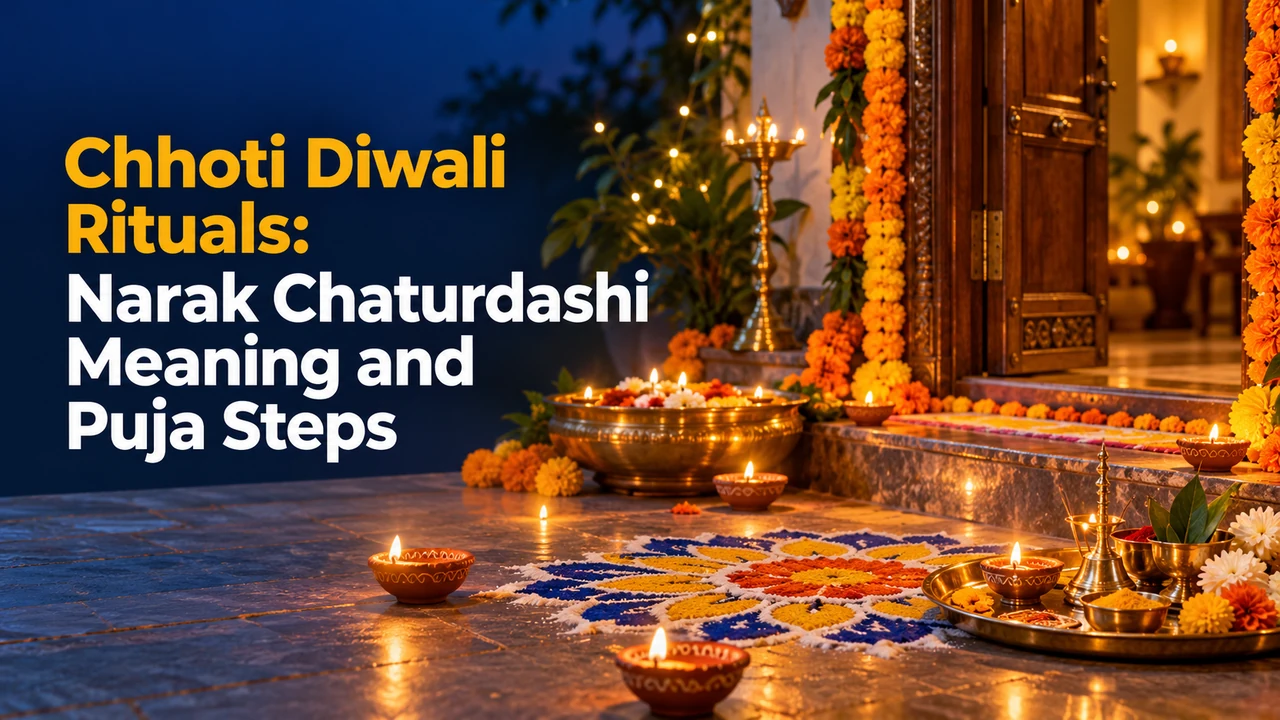
Chhoti Diwali in 2026 is not on the same day everywhere: Drik Panchang lists Sunday, 8 November for New Delhi, while calendars for the USA and UK show Saturday, 7 November.
The reason is how the festival is timed. Narak Chaturdashi is tied to the pre-dawn window before sunrise on the day when the Chaturdashi tithi is present, so the answer depends on sunrise and the tithi in your city. This guide gives the New Delhi timings, explains why some calendars show 7 November, describes the meaning of the day, and lays out a simple puja you can follow at home. Check a local panchang for your own city, because times shift with location.
Chhoti Diwali 2026: Date, Tithi and Muhurat
According to Drik Panchang for New Delhi, Narak Chaturdashi falls on Sunday, 8 November 2026. The Chaturdashi tithi begins at 10:47 AM on 7 November and ends at 11:27 AM on 8 November. The Abhyang Snan muhurta, the ritual oil bath before sunrise, is from 5:41 AM to 6:38 AM, a window of 57 minutes ending at sunrise.
| Detail | New Delhi, 2026 |
|---|---|
| Narak Chaturdashi (Chhoti Diwali) | Sunday, 8 November 2026 |
| Chaturdashi tithi begins | 10:47 AM, 7 November |
| Chaturdashi tithi ends | 11:27 AM, 8 November |
| Abhyang Snan muhurta | 5:41 AM to 6:38 AM, 8 November (57 minutes) |
| Sunrise | About 6:38 AM |
| Main Diwali | Sunday, 8 November (Amavasya from about 11:27 AM) |
| Dhanteras | Friday, 6 November |
Why Some Calendars Show 7 November
HinduTone explains that the USA and UK are a day behind India for this festival, because the pre-dawn Chaturdashi window falls on the morning of Saturday, 7 November there. A few Indian calendar sites also list Choti Diwali on 7 November, since the tithi starts that day and the evening Yama Deepam can be offered then. Because Kali Chaudas may also fall on a different date from Narak Chaturdashi, families should follow the panchang or priest they usually trust.
The Meaning of Narak Chaturdashi
Narak Chaturdashi is the day before the main Diwali puja and is also called Naraka Chaturdashi or Roop Chaudas in some regions. It marks the victory of good over evil. The most widely told legend says that Lord Krishna, with Satyabhama, defeated the demon king Narakasura and freed many captives. Versions of the story differ by region, and in some traditions Kali or Hanuman is worshipped on this day instead.
What the Day Symbolises
The day is about cleansing before celebration: the body, the home and the mind. The pre-dawn bath represents washing away negativity and laziness, and the lamps lit at dusk stand for driving away darkness and fear. It is often a smaller, quieter day, which is why it is called Chhoti (little) Diwali.
Chhoti Diwali Puja Steps at Home
There is no single method, and family customs vary. The following sequence reflects the common practices described by panchang sites such as DekhoPanchang.
- Wake before sunrise: plan to begin within the Arunodaya window, roughly 96 minutes before sunrise, and finish your bath inside the muhurta.
- Abhyang Snan: massage the body with sesame oil, then bathe with warm water. Some families add a herbal ubtan.
- Wear clean clothes and light a lamp at the family altar.
- Worship the deity of your tradition: Krishna, Kali or Hanuman, with flowers, incense and a simple offering.
- Clean and decorate: finish cleaning the house, draw rangoli and prepare the doorway.
- At sunset, offer Yama Deepam: light one lamp, traditionally facing south, at the entrance or outside the home for Yama, the god of death, and pray for protection of the family.
- Light diyas: many homes light a row of lamps in the evening, with 14 diyas mentioned in some traditions.
If you are unable to rise early, do what you can in spirit: a bath with sesame oil later in the morning and the evening lamp are still meaningful.
Food, Family and Safety
Many households eat simple festive dishes and sweets. Prepare diyas and decorations on the previous day so the morning is calm. Keep oil lamps away from curtains and children, and plan fireworks, if you use them, with safety in mind; we cover that separately in our Diwali safety guide.
A Quick Timeline for 7 and 8 November
| When | What to do |
|---|---|
| Saturday, 7 November | Prepare diyas and rangoli; check your local panchang for Yama Deepam timing |
| Sunday, 8 November, 5:41 to 6:38 AM (Delhi) | Oil bath (Abhyang Snan) and morning worship |
| Sunday, 8 November, evening | Yama Deepam at sunset, then Diwali Lakshmi Puja preparations |