Think with Google India data found that shopping searches peak about two to three weeks before Diwali, which means a festival post published during the festival is already late. Meanwhile “content calendar” is searched about 4,500 times a month in the US and “content calendar template” about 2,500, according to Mangools.
A content calendar for festivals and seasonal search is a publishing schedule built backward from the date demand peaks. TextRanch describes the idea simply: your audience searches for the same things at the same time each year, so the key is knowing when to give it to them. This guide shows how to set lead times, fill a 12-month calendar and avoid the common mistake of writing for a date that has already passed.
Step 1: List the Seasonal Moments Your Audience Cares About
Start with festivals, sales seasons, exams, tax deadlines and cultural events relevant to your niche. For an Indian blog covering lifestyle and money, that means Sharad Purnima, Dhanteras, Diwali, Bhai Dooj, year-end tax planning and the new year. A US-facing blog adds midterms, Thanksgiving and holiday travel.
Festival dates shift every year. DekhoPanchang notes that Bhai Dooj 2027 falls on Sunday, 31 October, 11 days earlier than this year’s 11 November, so last year’s calendar is not this year’s. Always anchor to the tithi and verify in a panchang.
Step 2: Set Lead Times
Content needs time to be crawled, indexed and shared before demand rises. The Think with Google India infographic found shopping searches peak about two to three weeks before Diwali, so a practical rule is to publish 4 to 6 weeks before the peak and refresh 1 to 2 weeks before it. WriterAccess suggests that if you will only write about a holiday once, about two weeks before is usually a good time, which is the minimum, not the ideal.
| Content type | Publish | Refresh | Example |
|---|---|---|---|
| Big festival guide | 6 to 8 weeks before | 1 to 2 weeks before | Diwali 2026 muhurat and samagri |
| Date or muhurat page | 3 to 4 weeks before | Day before, if dates move | Sharad Purnima date and timing |
| Shopping or gifting list | 4 to 6 weeks before | Weekly during season | Bhai Dooj gift ideas |
| Finance or planning tie-in | 4 to 6 weeks before | When rules change | Diwali bonus plan |
| Evergreen explainer | Any time | Yearly | Emergency fund guide |
Step 3: Build the 12-Month Grid
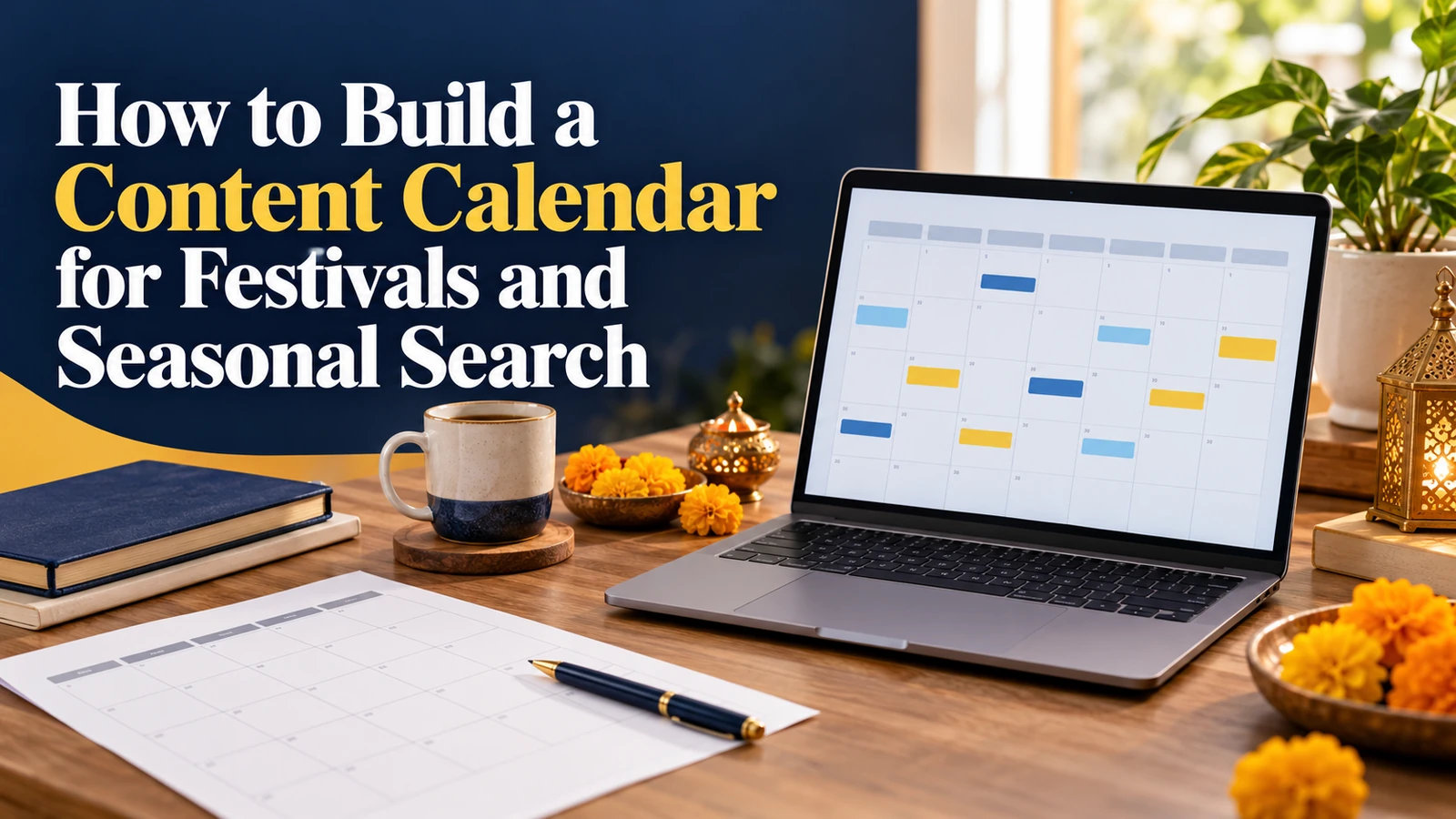
Use one sheet with a row per post and columns for topic, target keyword, content type, publish date, peak date, owner, status and refresh date. Colour-code evergreen, recurring and one-off rows. The seasonal part of your plan should be roughly half of the year’s themes, with the rest evergreen to keep traffic steady between peaks.
| Quarter | Moments (India) | Moments (US) | Content to schedule |
|---|---|---|---|
| Oct to Dec | Sharad Purnima, Dhanteras, Diwali, Bhai Dooj, year-end tax | Midterms, Thanksgiving, holiday travel | Festival guides, money tie-ins, travel tips |
| Jan to Mar | Budget, Holi, financial-year end | Tax season | Tax explainers, saving checklists |
| Apr to Jun | New financial year, summer travel, exams | Summer travel | Planning and travel guides |
| Jul to Sep | Raksha Bandhan, Ganesh Chaturthi, Navratri prep | Back to school | Gifting, festival prep, education |
The quarterly grid is a template. Replace the entries with the moments your readers actually search for.
Step 4: Example Plan for Diwali 2026
- Late September: publish the Diwali muhurat, samagri and 5-day calendar guide (done early, refreshed later).
- Early October: publish money tie-ins such as bonus planning, gold-buying and card-debt posts.
- Mid October: publish gifting lists, decor ideas and recipes.
- One week before: refresh with confirmed muhurat, city variations and updated links.
- After Diwali: add a short results note, then schedule next year’s refresh in your sheet.
Notice that this plan starts before the festival becomes obvious. If you read this on 25 October, the Diwali guide is already late, but tie-in posts such as Bhai Dooj gifts and post-Diwali content can still catch the rest of the season.
Step 5: Measure and Reuse
In Google Search Console, look at the queries for each seasonal URL year over year and note when impressions started rising. Move next year’s publish date to a few weeks before that point. Reuse the same URL every year and refresh it, instead of creating a new post, so authority builds on a single page. Our guide on how to rank in ChatGPT and AI Overviews explains why fresh, structured answers also help in AI search.
A Sample Row and a Weekly Routine
| Column | Example entry |
|---|---|
| Topic | Diwali 2026 Lakshmi Puja muhurat and samagri list |
| Keyword | diwali lakshmi puja muhurat 2026 |
| Type | Recurring seasonal guide |
| Publish by | Late September (6 weeks before the peak) |
| Peak date | Sunday, 8 November 2026 |
| Refresh | Week of 1 November, check city timings |
| Next year | Recheck dates in September 2027 |
Spend fifteen minutes each Monday on the same routine: check the next three entries, confirm drafts are on schedule, and add any new moments you noticed in the news or search data. Small weekly reviews keep a calendar alive.