Home
Categories
Free Tools
Write For UsAbout UsContact

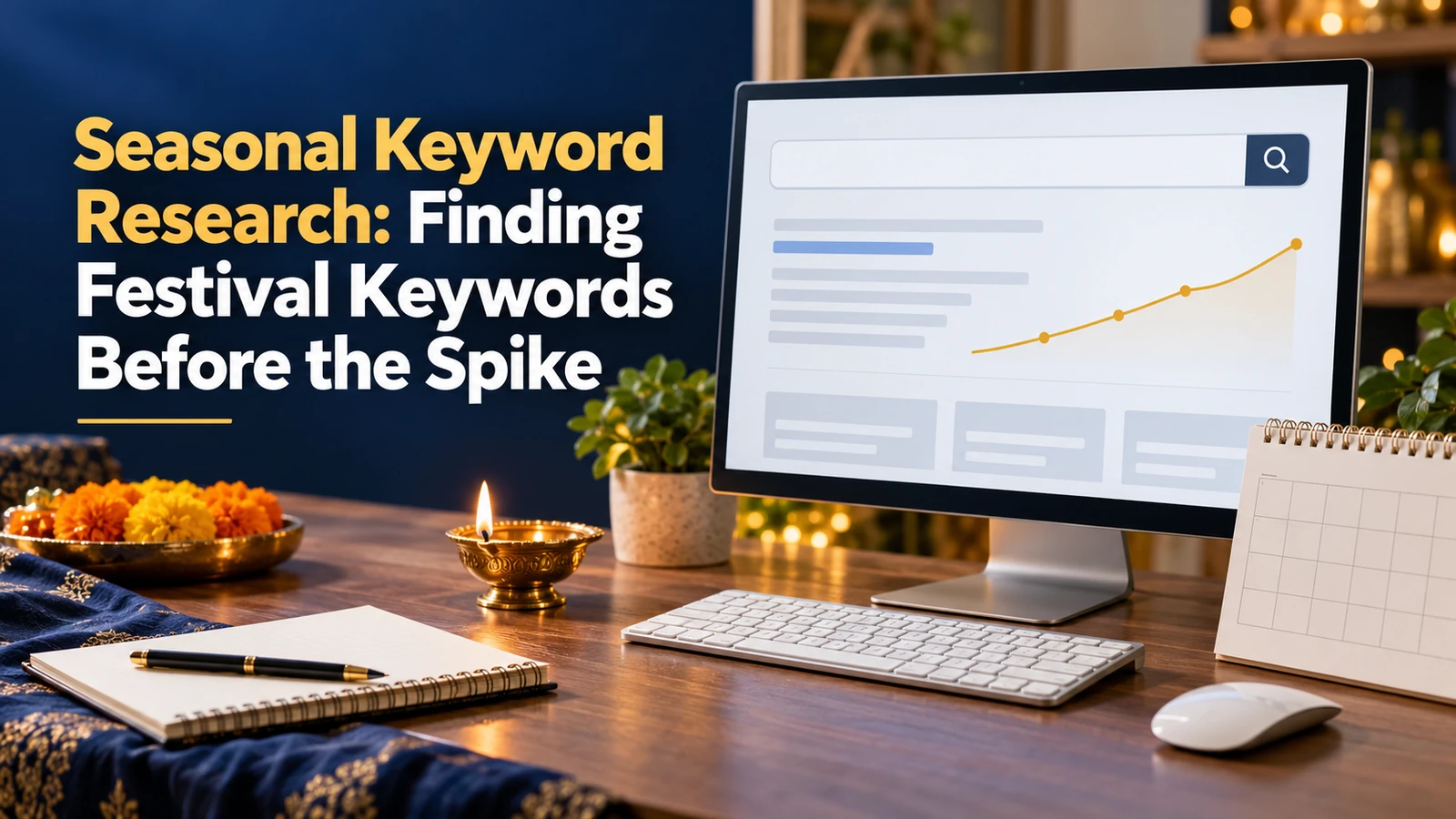
Seasonal Keyword Research: Finding Festival Keywords Before the Spike

How to do seasonal keyword research: spot festival keyword patterns, check Google Trends, read volume spikes correctly and target terms before the peak.

October 27, 2026 6 min read
Seasonal Keyword Research: Finding Festival Keywords Before the Spike

Key takeaways

  • Festival keywords follow patterns: event name + date, time, muhurat, recipe, gift, meaning and city.
  • Monthly volume averages hide spikes; look at 12-month trends, not one month.
  • Dates in a keyword (2025, 2026) change every year, so you must refresh or republish.
  • Search interest for shopping topics can peak two to three weeks before the event itself.
  • Capture questions and long-tail variants early, since they are cheaper to rank for.

Festival keywords can be huge and brief: Mangools data for India shows “deepawali poojan time” at about 56,600 searches a month, “diwali pooja timings” at 33,100 and “sharad purnima” at 29,600, with date-led variants like “kali puja 2026 date” at 17,600. These volumes exist for a few weeks of the year.

Seasonal keyword research is the process of finding the queries people use around a recurring event, learning when they start rising and publishing before the spike. The skill is reading monthly volume correctly: a number that looks like a steady 30,000 may be a three-week burst. This guide shows a repeatable workflow using Google Trends, a keyword tool and a few simple checks.

Festival Keyword Patterns to Search For

Most festival searches follow a small number of templates. Start with the event name and add each modifier, then check the volume and difficulty in your tool.

PatternExample (India, Mangools)Intent
Event + yearsharad purnima 2026 (about 21,100 monthly)Date and ritual info
Event + date or timediwali puja muhurat (about 20,800), deepawali poojan time (about 56,600)Timing
Event + dates listingkali puja 2026 date (about 17,600)Date check
Month + festivalpurnima december 2025 (about 52,500)Calendar lookup
Event + recipe or giftkheer recipe, bhai dooj gift ideasPractical help
Event + comparison or moneygold etf vs physical gold (about 1,400)Decision support

Notice the date-led keywords such as “purnima december 2025”, which still show high volume after the date. Last year’s searches inform your forecast but do not equal this year’s traffic.

How to Read Volume and Timing

Use the 12-Month Trend, Not Only the Average

The “diwali bonus” query shows about 5,000 searches at its seasonal peak compared with a 12-month average of roughly 1,800, according to Mangools. If you only read the average you would underrate it. Use Google Trends to see the shape of the curve and identify the week the search interest begins to climb.

Compare Year Over Year

Set the range to five years and look at the same festival each time. Note the first week of growth, the peak week and the decline. Festival dates move with the lunar calendar, so line up the curves by the festival, not by the calendar date.

Check Lead Time

Think with Google India data found shopping searches peak about two to three weeks before Diwali, so publishing at the festival is too late. Search Atlas similarly notes that holiday search patterns typically begin weeks or months before the date, creating a long preparation phase.

A Repeatable Workflow

  • List your festivals and seasons from the content calendar.
  • Seed keywords: for each, write the event name plus the patterns in the table.
  • Pull data: check volume, difficulty and 12-month volume in your keyword tool; for new or small phrases, use Google Trends and autosuggest.
  • Check the SERP: note whether results are guides, tools, shops or videos, and what the top pages lead with.
  • Choose the primary keyword: pick the phrase that matches your page and your authority level, and keep the rest as secondary terms.
  • Schedule the publish date four to six weeks before the first rise.
  • Record results after the season and adjust next year.

Common Mistakes

MistakeProblemFix
Reading average volume onlyUnderestimates short spikesUse 12-month and trend views
Publishing at the peakPage not indexed in timePublish weeks earlier
New URL every yearSplits authorityRefresh the same URL
Ignoring locationDates and times differ by city and countrySegment by location and state clearly
Copying last year’s datesLunar dates shiftVerify with a panchang each year

Our AEO vs SEO guide explains how clear, dated, structured answers also suit AI search results, which often pull festival timing queries.

Worked Example: A Festival Keyword Map for This Season

MomentDate (India, 2026)Keyword ideaPattern
Sharad PurnimaSunday, 25 Octobersharad purnima 2026Event + year
DhanterasFriday, 6 Novembergold etf vs physical goldEvent + money decision
DiwaliSunday, 8 Novemberdiwali puja muhuratEvent + time
Bhai DoojWednesday, 11 Novemberbhai dooj gift ideas for sisterEvent + gift
Year-endDecemberhealth insurance renewalDeadline + task

Each row has a different pattern and a different publish date. Work backward from the date in the second column, and you will see why the earliest posts needed to go live weeks ago.

Related readHow to Update Old Blog Posts for Seasonal Traffic Every YearRead →

Free tools for SEO

FAQs

What is seasonal keyword research?

It is the process of finding the search terms people use around a recurring event or season, learning when interest begins and peaks, and publishing content in time. It combines keyword tools with trend data, so you can see not only how many people search but also when they do, and plan your publishing calendar around those patterns. The output is a calendar of keywords and dates that tells you what to publish and when.

How early should I target festival keywords?

Aim to publish four to six weeks before the first expected rise. Think with Google India data found shopping searches peak about two to three weeks before Diwali, and Search Atlas notes that holiday search patterns typically start weeks or months before the date. Earlier publishing gives search engines time to crawl and index the page and for you to fix problems. Record the date of your first rise each year, because that date becomes your future deadline.

How do I use Google Trends for seasonal keywords?

Enter your festival keyword, set the range to five years and the region to your target country, and compare the curve from year to year. Note the week the line starts to rise and the week it peaks. Compare related queries to spot variants, and use Trends alongside a keyword tool, because Trends shows relative interest rather than absolute search volume. Remember to compare the same festival across years, since dates move against the solar calendar.

Why does a festival keyword show high volume out of season?

Many tools show a 12-month average or the volume of the highest month, which can include past dates. Date-led keywords like “purnima december 2025” can also keep showing numbers after the date. Check the monthly breakdown and the trend line before assuming steady demand, and compare the figure with the previous year’s curve for the same festival. When in doubt, trust the trend line over any single headline number.

Should I include the year in the festival keyword?

Often yes for date and timing queries, because searchers type the year. But keep the URL free of the year when possible so you can refresh it annually. Put the year in the title and headings, and update it each cycle with fresh, confirmed information. If you must change the URL, set up a proper redirect from the old address. Test both versions in your title once, and watch which wording earns more clicks.

Can small blogs compete for big festival keywords?

Big head terms are difficult, but long-tail phrases and local or practical angles are realistic. Examples include city-specific timings, recipes, checklists and money tie-ins. Check keyword difficulty, publish early and make your page genuinely more useful than the current top results. A focused page that answers one question well often beats a vague page about the whole festival. Start with the narrow question you can answer best and expand once that page performs.

Find the Spike Before It Finds You

Seasonal keyword research is mostly calendar work: know what is coming, learn the pattern and publish before the line on the chart bends upward.

Pick one festival, run the workflow today and put the publish date in your calendar. Next year’s traffic starts with this year’s notes.

Sources: Think with Google: Shopping 2018 India infographic; Search Atlas: Seasonal keywords; DashClicks: Google Trends for SEO; Mangools KWFinder (India)

Was this guide helpful?
Jenny Edwards
Written by

Jenny Edwards

Jenny Edwards is an SEO and Digital Growth Specialist with 5+ years of experience in Technical SEO, AI SEO, International SEO, and organic growth strategy. She helps businesses improve search visibility through data-driven SEO, content optimization, search experience improvements, and AI-focused search strategies. Her work focuses on helping brands grow through sustainable and future-ready digital marketing.

More from this author

Keep exploring

Have expertise to share? Write for WritoryBuzz.Read the guidelines and send us your pitch.
Become a contributor
Free tools

63 free tools for writers, SEOs and developers

Open one in your browser and start. Nothing to install, and your text stays on your device.

PrivateInstant resultsNo sign up
Write for us

Have expertise to share?

  • Original, well researched guides
  • Reviewed by our editors
  • 29 categories to publish in
Submit a guest post
© 2026 WritoryBuzz. All rights reserved.Back to top