Home
Categories
Free Tools
Write For UsAbout UsContact

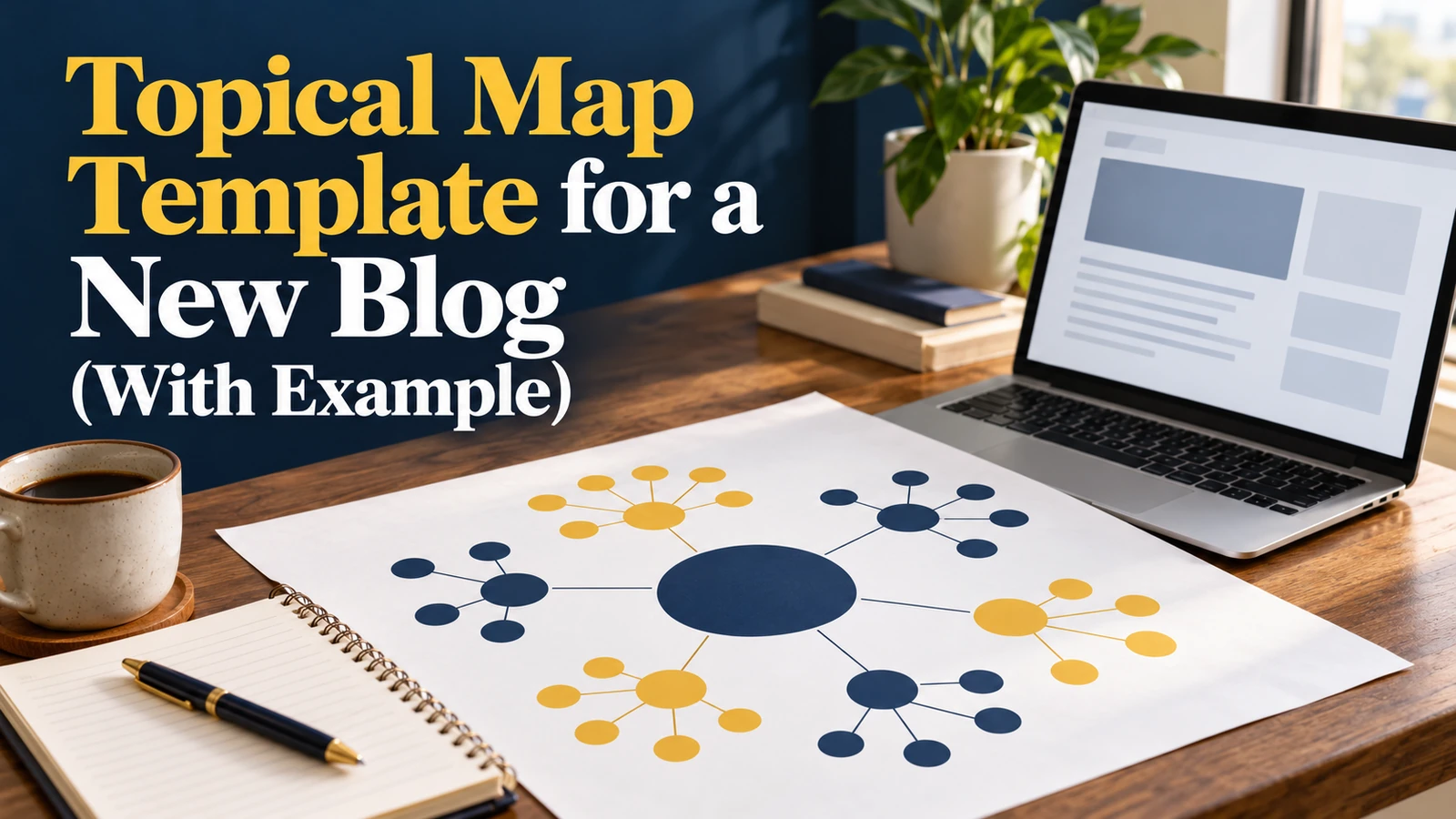
Topical Map Template for a New Blog (With Example)

Build a topical map for a new blog: pillar and cluster structure, a copyable template, a worked finance-and-festival example and a publishing order.

October 28, 2026 Updated November 4, 2026 6 min read
Topical Map Template for a New Blog (With Example)

Key takeaways

  • A topical map is pillar pages plus cluster pages that answer sub-questions, linked together.
  • New blogs should start narrow: one pillar, 10 to 20 supporting posts.
  • Map one primary keyword to one URL to avoid cannibalisation.
  • Publish the pillar first or early, then clusters in priority order, linking each way.
  • Review the map every quarter using Search Console data.

A practical topical-authority guide from Justwords suggests mapping one niche into a pillar plus about 10 to 20 supporting articles and publishing the pillar first. That is a plan a new blog can finish in a quarter.

A topical map is a planned set of pages that covers a subject in depth, showing which page answers which question and how pages link together. A new blog has no authority, so it needs focus. What follows is a template you can copy and a full example.

What a Topical Map Contains

Surfer SEO and Averi describe the same structure: a pillar page covers the broad topic, and cluster pages cover narrower questions, each linking to the pillar and to related clusters. The map is your plan; the internal links are how Google and readers see the structure.

ElementMeaningExample
Core topicThe subject you want to be known forPersonal finance for Indian festivals
PillarA broad guide to the core topicFestive money planning guide
ClusterA specific question or subtopicCredit card interest, bonus plan, gold ETF
IntentWhat the searcher wantsInformational, commercial, transactional
PriorityOrder of publishingPillar, then high-demand clusters

The Template

Copy this table into a sheet and fill one row for every page. Use one primary keyword per row.

ColumnWhat to write
Page typePillar, cluster, comparison, tool or FAQ
Working titleThe question or headline the page answers
Primary keywordOne phrase, checked for volume and difficulty
Secondary keywordsVariants and questions to include
Search intentInformational, commercial, transactional or navigational
Links toThe pillar and two related clusters
Priority and dateOrder of publishing and target date
StatusIdea, brief, draft, published, refreshed

Example Map: Festive Money Planning

Here is a small map for a blog that covers money around festivals, using the topics from this very batch.

RolePagePrimary keywordIntent
PillarFestive money planning guidefestive money planningInformational
ClusterDiwali bonus plandiwali bonusInformational
ClusterGold ETF vs physical goldgold etf vs physical goldCommercial
ClusterCredit card interest explainedcredit card interest rateInformational
ClusterBuy now pay later risksbuy now pay later risksInformational
ClusterEmergency fund calculator guideemergency fund calculatorInformational
ClusterSIP vs lump sumsip vs lumpsumCommercial

Each cluster links up to the pillar and sideways to one or two related pages, such as the card-interest page linking to the BNPL page. The pillar links down to every cluster.

Publishing Order and Timeline

Justwords outlines a staged approach: foundation weeks (topic map and pillar outline), then clusters, then refinement. A simple version for a new blog follows.

WeeksWork
1 to 3Research the niche, build the map, outline the pillar
4 to 6Publish the pillar and three high-priority clusters, linked together
7 to 12Publish remaining clusters, add internal links backwards and forwards
QuarterlyReview impressions, merge overlaps, add gaps

If you have older posts that do not fit the map, our guide on AEO vs SEO can help you shape new pages for answer-style search as well.

How to Prioritise Which Cluster to Write First

Not every cluster deserves the same urgency. Score each idea from 1 to 3 on three factors and write the highest totals first.

FactorScore 3 meansScore 1 means
Search demandClear, steady or seasonal demandLittle or no measurable demand
Ranking difficultyWeak pages rank, so you can competeDominated by strong sites
Business or reader valueDirectly serves your audience’s next stepOnly loosely related

Add a time factor for seasonal ideas: a festival cluster scores higher when its date is close. Review the scores quarterly, because search demand and your own authority change.

Related readKeyword Cannibalization: How to Find and Fix ItRead →

Free tools for SEO

FAQs

What is a topical map in SEO?

A topical map is a planned set of pages covering a subject in depth, showing which page targets which keyword and how pages link together. It usually has a pillar page for the broad topic and cluster pages for specific questions. The aim is to demonstrate depth on a subject so that search engines and readers trust the site as a useful source. It is a plan before it is a link structure, and the plan is what keeps a new site focused.

How many posts does a new blog need in a topical map?

A common starting point is one pillar and about 10 to 20 supporting articles, as the Justwords guide suggests. That is large enough to show coverage and small enough to finish. Expand to adjacent subtopics only after the first cluster is published and performing, so you do not spread a young site across too many subjects. Choose subtopics your audience genuinely asks about, rather than topics that merely look impressive.

Should I publish the pillar page first?

Justwords recommends publishing the pillar first and then adding clusters. Many editors publish the pillar with the first few clusters so that internal links work from day one. The important part is that every cluster links to the pillar and the pillar links to the clusters, so that readers and crawlers can move easily between them. Draft the pillar outline early, so each cluster knows what to link up to.

What is the difference between a pillar and a cluster?

A pillar page covers a broad topic and links to detailed pages. A cluster page answers one narrower question in depth and links back to the pillar. Pillars usually target broader keywords, while clusters target more specific, long-tail phrases. Together they show both breadth and depth on the subject. A pillar answers the big question briefly and points to clusters; a cluster goes deep on one narrow question and returns to the pillar.

How do I avoid keyword cannibalisation in a topical map?

Assign one primary keyword to one URL and write down the intent of each page. If two pages answer the same question, merge them or differentiate the intent. Review Search Console for queries that show two of your URLs and fix overlaps with merging, redirects or clearer targeting. The map sheet is your first defence, so keep it updated. Also decide which of two overlapping ideas deserves its own page before writing begins.

Do I need a paid tool to build a topical map?

No. A spreadsheet, a free keyword tool, Google autosuggest, People Also Ask and Search Console are enough to begin. Paid tools such as Semrush, Ahrefs or Mangools speed up volume and difficulty checks. The planning logic matters more than the tool, and a clear sheet that you actually maintain beats an expensive dashboard you do not. Tool subscriptions can wait until the first cluster is live and you know what you need.

Start Narrow and Build Outward

A topical map turns a vague niche into a list of pages you can actually publish. Fill the template for one pillar and ten clusters this week.

When the first cluster ships, link it to the pillar and the next cluster. That habit is the map becoming real.

Sources: Justwords: How to build topical authority in a niche; Surfer SEO: Topical authority template; Averi: Content pillar and topic cluster template; Linkbot: Topic clusters for SEO

Was this guide helpful?
Jenny Edwards
Written by

Jenny Edwards

Jenny Edwards is an SEO and Digital Growth Specialist with 5+ years of experience in Technical SEO, AI SEO, International SEO, and organic growth strategy. She helps businesses improve search visibility through data-driven SEO, content optimization, search experience improvements, and AI-focused search strategies. Her work focuses on helping brands grow through sustainable and future-ready digital marketing.

More from this author

Keep exploring

Have expertise to share? Write for WritoryBuzz.Read the guidelines and send us your pitch.
Become a contributor
Free tools

63 free tools for writers, SEOs and developers

Open one in your browser and start. Nothing to install, and your text stays on your device.

PrivateInstant resultsNo sign up
Write for us

Have expertise to share?

  • Original, well researched guides
  • Reviewed by our editors
  • 29 categories to publish in
Submit a guest post
© 2026 WritoryBuzz. All rights reserved.Back to top