
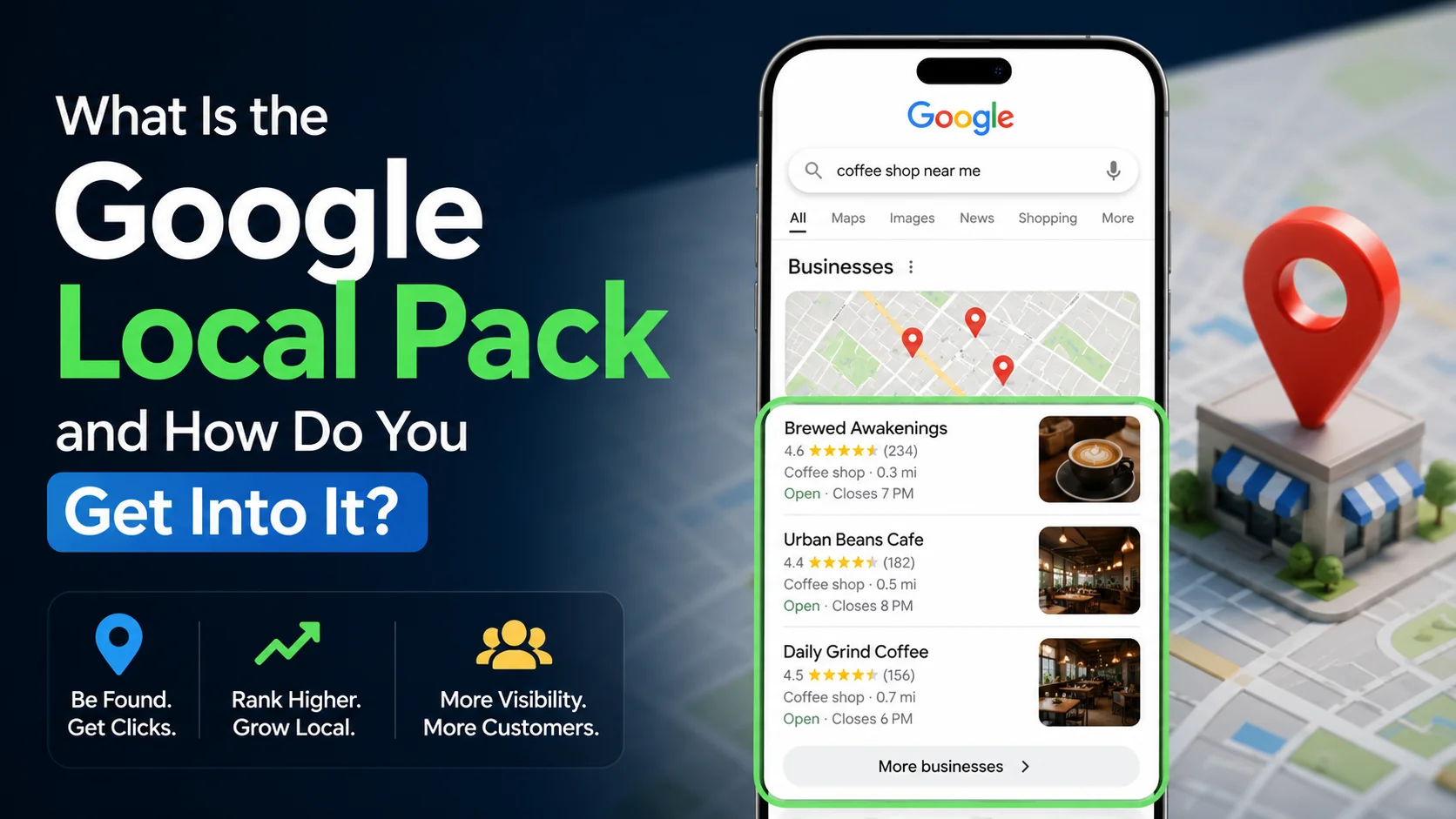
Search “plumber near me” or “coffee shop downtown” and the first thing that loads is not a list of blue links, it is a map with three highlighted business listings sitting above everything else. That box is the Google local pack, and for any business serving customers in a specific geographic area, getting into it matters more than almost any other single ranking outcome. This guide covers exactly what the local pack is, how Google decides which three businesses appear in it, and where to start.
What the Local Pack Actually Is
The local pack is the map-plus-three-listings box Google displays for searches carrying genuine local intent, pulling directly from a business’s Google Business Profile rather than from a business’s own website content the way traditional organic results do. This distinction matters because it means local pack visibility depends on a genuinely different set of ranking signals than traditional SEO, even though the two systems overlap in places, and WritoryBuzz’s broader local SEO tools cover both sides of that overlap.
You can see exactly how your own listing currently renders inside this box using a free google business profile preview, which shows the map pack exactly as a real searcher would see it rather than requiring you to guess based on your own profile dashboard alone.
The Three Ranking Factors Google Actually Weighs
Google has publicly confirmed the local pack ranking algorithm weighs three core factors, relevance, how well a business profile matches the actual search query, distance, how close the business sits to the searcher or the searched location, and prominence, how well-known and well-reviewed the business is both online and offline.
Distance is the one factor a business genuinely cannot control, since it depends entirely on the searcher’s own physical location. Relevance and prominence, by contrast, are both genuinely within a business owner’s control, and both respond directly to specific, well-documented optimization actions covered throughout the rest of this guide.
| Ranking Factor | What It Measures | Can a Business Influence It |
| Relevance | How well the profile matches the search query | Yes, through category and description optimization |
| Distance | Proximity between searcher and business | No, determined by searcher location |
| Prominence | Overall reputation, reviews, and citations | Yes, through reviews and consistent listings |
Why Structured Data Still Matters for Local Visibility
Even though the local pack pulls primarily from a Google Business Profile, a business’s own website still plays a supporting role, specifically through LocalBusiness schema markup that explicitly confirms a business’s name, address, phone number, and service area to Google’s crawlers in a machine-readable format. Generating this markup correctly with a schema markup generator removes the guesswork from a technical requirement many business owners skip entirely simply because they do not know it exists.
How the Local Pack Differs From Regular Organic Rankings
A business can rank on page one organically while remaining completely absent from the local pack directly above those same organic results, since the two systems draw on different primary data sources and weigh different signals. Checking how your listing actually appears using a serp preview tool alongside a local pack preview shows both results side by side, making it immediately clear whether a gap exists between organic and local pack visibility specifically.
Getting Started: The First Three Things to Fix
Claiming and fully completing your Google Business Profile, every available field rather than the bare minimum, represents the essential foundation every other local pack optimization step builds on top of. Selecting the most specific, accurate business category available, rather than a broader generic one, directly improves the relevance signal Google’s ranking algorithm specifically evaluates.
Building a steady, genuine flow of customer reviews addresses the prominence factor directly, since review count and rating both feed into how Google assesses a business’s overall reputation relative to nearby competing listings. Running your own listing through a free google business profile preview periodically confirms these changes are actually reflected the way you intend before a real customer ever sees them.
For the complete set of tools referenced across this guide, visit WritoryBuzz’s full local SEO toolkit.