Home
Categories
Free Tools
Write For UsAbout UsContact

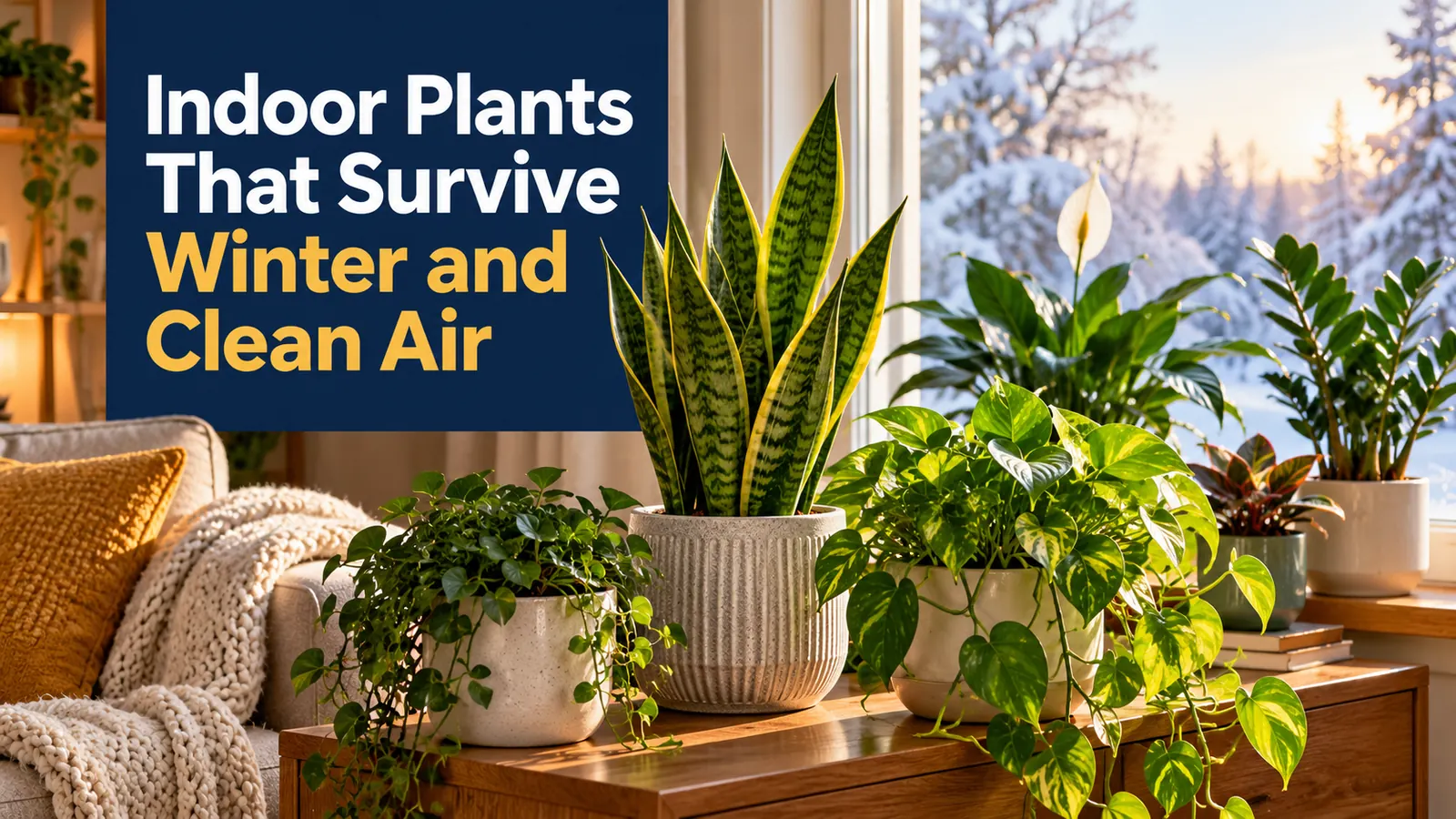
Indoor Plants That Survive Winter and Clean Air

Indoor plants that survive winter and clean air: what the NASA and Drexel studies show, plus Nebraska Extension winter care for light, water and humidity.

October 29, 2026 6 min read
Indoor Plants That Survive Winter and Clean Air

Key takeaways

  • NASA researchers tested 15 houseplants in sealed conditions and found some removed up to 87 percent of certain pollutants in 24 hours.
  • Drexel researchers reanalysed 12 studies and found plants have little effect in real homes, where air is exchanged by windows and HVAC.
  • Waring said a typical particle air purifier is around 5,000 times more effective than plants, and that plants still offer psychological benefits.
  • Nebraska Extension says plants need far less water in winter: check the top inch of soil first.
  • Reduce or skip fertilizer in winter, and give humidity-loving plants a bathroom or kitchen.

A 2019 Drexel University study by Michael Waring and Bryan Cummings, which reanalysed data from 12 sealed-chamber experiments, concluded that matching the air cleaning of simply opening a couple of windows would take at least 10 plants per square metre of floor space, and perhaps up to 1,000. That finding sits awkwardly beside the famous NASA study, which tested 15 houseplants and reported that some removed as much as 87 percent of certain pollutants within 24 hours.

This guide to indoor plants that survive winter and clean air keeps both stories in view. Plants are lovely, can improve a room and can be kept alive through winter with a few rules from Nebraska Extension. But they are not a substitute for ventilation or an air purifier, and I will not claim otherwise.

What the NASA Study Found

A UCCE Orange County Master Gardeners page, adapted from an article by horticulture adviser Laura Pottorff, describes the NASA work. Researchers led by Dr. Bill Wolverton tested 15 houseplants against benzene, formaldehyde and trichloroethylene, and found that some could remove as much as 87 percent of indoor air pollutants within 24 hours. They suggested one potted plant per 100 square feet.

That was a laboratory result in a small sealed chamber. The next section explains why it does not translate to a living room.

What the Drexel Study Found

In 2019, Drexel researchers Michael Waring and Bryan Cummings reanalysed data from 12 sealed-chamber studies. They concluded that houseplants do not meaningfully improve indoor air quality, because ordinary air exchange from windows and heating or cooling systems moves air far faster than plants can clean it.

ClaimDrexel finding
Plants needed to match opening a couple of windowsAt least 10 per square metre of floor, up to 1,000
Plants vs a typical particle air purifierPurifier about 5,000 times more effective (Waring)
Do plants still help?Psychological benefits, according to Waring
Biowalls (engineered plant filters)May help remove VOCs, but need ongoing maintenance

So keep plants for greenery and mood, and use ventilation or a purifier if air quality is a concern.

Winter Care: Light, Water and Humidity

Sarah Browning of Nebraska Extension notes that indoor light drops sharply in winter, plants need much less water and heating dries the air.

FactorWinter advice (Nebraska Extension)
LightCacti and succulents still need high light, so a cool room with a south-facing window suits them
WateringA plant watered daily in summer may need only weekly watering; check the top inch of soil
DrainageUse containers with drainage holes and water thoroughly
HumidityFerns, Rex begonias, Prayer Plant and Calathea need more moisture; try bathrooms or kitchens
TemperatureCacti and succulents do best at 55 to 60 degrees Fahrenheit, not below 45
FertilizerReduce or avoid it; flush salts with Epsom salt water

Which Plants to Choose

The Nebraska page does not name low-light plants, so I rely on its general advice: choose plants that match the light you have. Succulents and cacti suit bright windows. Moisture lovers such as ferns and calatheas suit bathrooms and kitchens.

Plant typeWhere it fitsWinter note
Cacti and succulentsBright, cool windowsillWater sparingly
FernsBathroom or kitchenKeep the soil lightly moist
Calathea and Prayer PlantHumid spotAvoid dry air near heaters
Rex begoniaHumid spotNeeds more moisture

If a plant keeps struggling, move it, check the soil and resist the urge to water more.

Real Ways to Clean Indoor Air

If air quality is a concern, open windows when outdoor air is good, run exhaust fans while cooking and consider a purifier. For ideas on smart air monitors and ventilation, see our guide to smart home tech. Pets may chew plants, and the sources do not address toxicity, so check each plant before you buy.


Related readThanksgiving Table Decor Ideas: Centerpieces and Place SettingsRead →

Free tools for Lifestyle

FAQs

Do houseplants really clean the air?

Not in a meaningful way in a typical home. The NASA study found some plants removed pollutants in a sealed chamber, but Drexel researchers reanalysing 12 studies concluded that windows and HVAC exchange air far faster. Plants have psychological benefits, and they are worth keeping for greenery. It is still worth keeping plants for their appearance, and for the calm that caring for them can give, and just do not expect them to replace ventilation.

What did the NASA clean air study find?

Researchers led by Dr. Bill Wolverton tested 15 houseplants against benzene, formaldehyde and trichloroethylene, and found that some removed as much as 87 percent of pollutants within 24 hours. This was in sealed conditions, not an ordinary home, so the result does not show that plants clean real rooms. Later research has questioned how far the lab result applies to rooms with doors, windows and air flow, so read it as an interesting experiment, not a household guide.

How many plants would I need to clean my air?

Drexel researchers calculated that matching the air cleaning of opening a couple of windows would take at least 10 plants per square metre of floor space, and up to 1,000 depending on the plants. That is why plants are not a practical way to clean air. Even with extreme numbers, the real home has air moving all the time, so a room full of plants would still lose to a window, and it would be difficult to keep them alive.

How often should I water plants in winter?

Much less than in summer. Nebraska Extension says a plant watered daily in summer may need watering only weekly in winter. Check the top inch of soil first, use pots with drainage holes and water thoroughly when needed. Overwatering is a common winter problem. Overwatering is the commonest winter mistake, so lift the pot to feel its weight, and let the soil dry a little before the next drink.

How do I help plants that need humidity?

Nebraska Extension says winter heating dries indoor air, and plants such as ferns, Rex begonias, Prayer Plants and Calatheas need more moisture. Place them in a bathroom or kitchen, or cover them with a cloche. Keep them away from direct heat sources. Grouping plants together can help raise the humidity around them, and a tray of pebbles with water, kept below the pots, is another simple option.

Should I fertilise plants in winter?

Nebraska Extension advises reducing or avoiding fertiliser, since most winter indoor spots are low in light and plants grow slowly. To flush salt build-up, it suggests mixing 1 teaspoon of Epsom salts into a gallon of water and pouring it through the pot until it drains out. Resume feeding in spring, when the days lengthen and you see new growth, and use a diluted dose instead of a full-strength one at first.

Keep the Plants, Fix the Air Separately

Plants deserve a place in your winter home for what they do well: they make rooms feel alive and give you something to care for.

For the air itself, open a window and look at a purifier if you need one. Then give each plant the light, water and humidity it asks for, and enjoy the green.

Sources: UCCE Orange County Master Gardeners: Indoor plants and clean air; The Philadelphia Inquirer: Drexel study on houseplants and indoor air; Nebraska Extension: Winter care of indoor plants

Was this guide helpful?
Jinal Mistry
Written by

Jinal Mistry

Jinal Mistry is the Founder of WritoryBuzz and an SEO & Digital Growth Specialist with 5+ years of experience in Technical SEO, AI SEO, International SEO, and organic growth strategy. She helps businesses improve search visibility through data-driven SEO, content optimization, search experience enhancement, and AI-focused search strategies.Having worked with clients across multiple industries and international markets, Jinal specializes in building sustainable organic growth through technical excellence, user-focused optimization, and future-ready digital marketing practices. Through WritoryBuzz, she shares insights on SEO, AI search, content strategy, digital marketing, and emerging search trends to help businesses and marketers stay ahead in the evolving digital landscape.

More from this author

More in Lifestyle

View all in Lifestyle →

Keep exploring

Have expertise to share? Write for WritoryBuzz.Read the guidelines and send us your pitch.
Become a contributor
Free tools

63 free tools for writers, SEOs and developers

Open one in your browser and start. Nothing to install, and your text stays on your device.

PrivateInstant resultsNo sign up
Write for us

Have expertise to share?

  • Original, well researched guides
  • Reviewed by our editors
  • 29 categories to publish in
Submit a guest post
© 2026 WritoryBuzz. All rights reserved.Back to top