
The average price SEO professionals consider acceptable for a single high-quality backlink sits at 508.95 US dollars in 2026, based on a survey of over 400 professionals conducted by RankZ, and 80.9 percent of those surveyed expect link building to become more expensive over the next two to three years. Those numbers alone explain why link building remains one of the most closely watched disciplines in SEO: it works, it is not getting cheaper, and doing it well requires understanding several genuinely different methods rather than one single tactic.
Link building is the practice of acquiring hyperlinks from other websites that point back to your own, used by search engines as a signal of a page’s trustworthiness and relevance. It sits at the center of off-page SEO, and while the underlying goal, earning external trust signals, has stayed constant for two decades, the specific methods considered safe and effective have evolved considerably.
The Main Link Building Methods
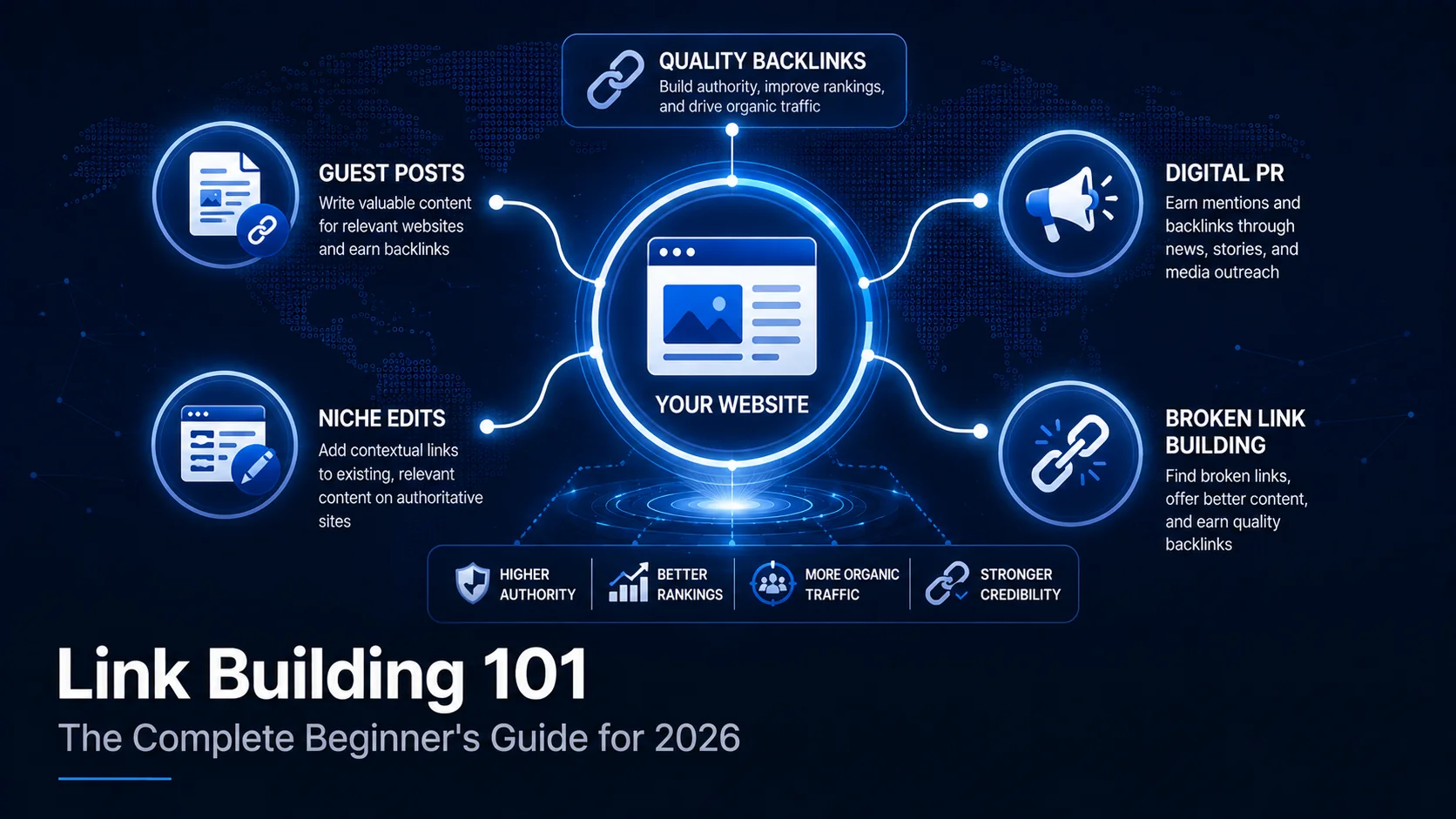
Guest posting, publishing original content on a relevant third-party site with contextual links, remains the most widely used method, employed by an estimated 47 to 65 percent of SEO professionals according to RankZ. Niche edits insert a link into an already-published, already-indexed page, offering faster results at a lower average cost of 141 to 225 US dollars. Digital PR earns editorial coverage through journalist outreach at a higher cost of 750 to 2,000 US dollars per placement but delivers the strongest single authority signal. Broken link building and resource page outreach round out the core toolkit, relying more on research time than direct spend.
| Method | How It Works | Typical Cost |
| Guest posting | New article placed on a relevant site with backlinks | 220 to 609 USD |
| Niche edits | Link inserted into an existing, already-indexed page | 141 to 225 USD |
| Digital PR | Editorial coverage earned through journalist pitching | 750 to 2,000 USD |
| Broken link building | Replacing dead links on relevant sites with your resource | Mostly time investment |
| Resource page outreach | Getting listed on curated, topic-specific resource pages | Mostly time investment |
| HARO and journalist requests | Providing expert quotes for journalists seeking sources | Mostly time investment |
White Hat vs Black Hat Link Building
White hat link building earns links through genuine value, useful content, real expertise, and relationships with legitimate publishers, and it is built to withstand scrutiny from Google’s algorithm over time. Black hat tactics, including link farms, private blog networks, and bulk-purchased links with no editorial review, can produce short-term ranking gains but carry real risk of manual penalties once detected. RankZ’s 2026 research found only 1.37 percent of a 500,000-site guest posting vendor database meets genuine quality standards, underscoring how much low-quality inventory a careless campaign can end up buying into.
How to Start Link Building With No Budget
A zero-budget starting point combines free guest posting pitches to genuinely relevant sites, broken link building on resource pages in your niche, and responding to journalist source requests through services built for that purpose. None of these require payment, only research time and a willingness to write genuinely useful pitches, and a consistent few hours weekly on this combination can produce real links within the first two to three months.
Free, editorially reviewed guest posting remains one of the strongest zero-budget starting points in this list. WritoryBuzz accepts contributor pitches from marketers, founders, and technology professionals across business, AI, and fintech topics as a genuine first step into a broader link building routine.
Consistency Beats Intensity
Link building rewards steady, sustained effort over sporadic bursts of activity. A campaign earning 5 to 10 genuinely relevant links per month for a year builds a far stronger, more natural-looking profile than one earning fifty links in a single rushed sprint, and search engines are increasingly good at telling the difference between the two patterns.