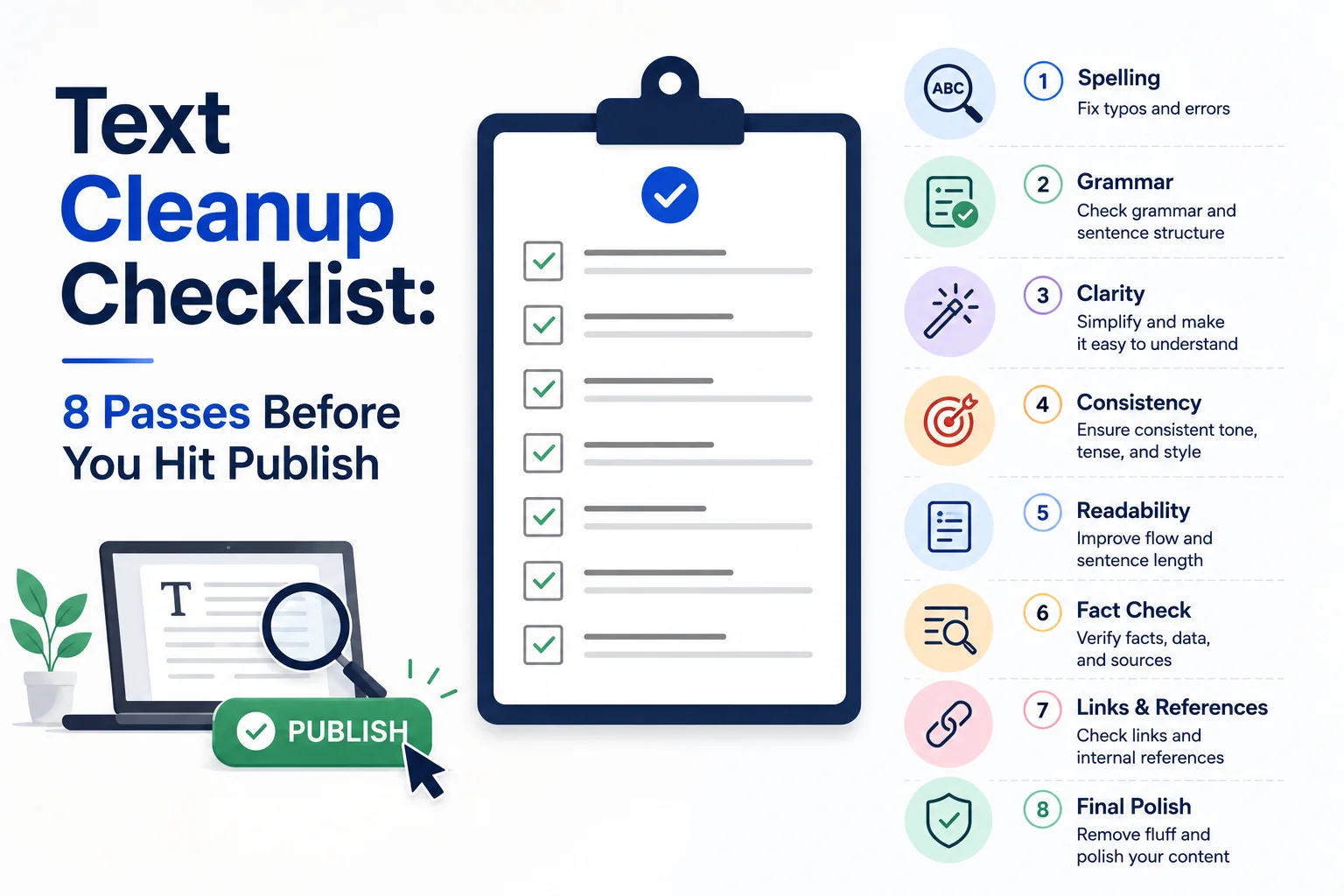
Editing everything at once, checking grammar, repetition, structure, and formatting simultaneously in a single read-through, is where most editing passes lose effectiveness, since each concern competes for the same limited attention. Running eight focused, single-purpose passes catches more issues in less total time than one unfocused pass, because each pass only requires watching for one specific thing.
This checklist orders eight passes from mechanical to conceptual, structured so each pass builds cleanly on the last without requiring the previous fixes to be re-checked.
The Eight Passes
Pass 1: Exact duplicate detection. Scan for repeated words, lines, and sentences using an automated tool before anything else, since this catches mechanical errors fastest and clears the easiest issues out of the way first.
Pass 2: Read aloud for flow. Read the full piece aloud, or use text-to-speech, listening specifically for awkward phrasing and repeated transitional words that a silent read tends to skip past.
Pass 3: Check paragraph opening variety. Scan just the first few words of each paragraph in sequence, checking for the same transitional phrase, such as however or additionally, opening multiple consecutive paragraphs.
Pass 4: Verify claims and statistics. Confirm every named fact, statistic, or study reference is accurate and properly attributed, since this pass is best done separately from a flow-focused read where factual details are easy to skim past.
Pass 5: Check heading structure. Scan the heading hierarchy alone, without reading body text, confirming a logical progression and no skipped heading levels that would confuse both readers and search engines parsing the page structure.
Pass 6: Confirm internal and external links work. Click every link in the piece to confirm it resolves correctly, rather than assuming a link that looked correct when written still points to a live page.
Pass 7: Check keyword and phrase density. Confirm the target keyword appears naturally without stuffing, and that no other phrase has been unintentionally overused across the piece.
Pass 8: Final format and metadata check. Confirm title tag, meta description, slug, and any schema markup are all correctly filled in and consistent with the finished content, since content edits made during passes one through seven sometimes drift from metadata written before those edits.
Why This Order Specifically
Mechanical passes come first because they are fast, objective, and do not require judgment calls, clearing obvious issues before the more subjective passes that follow. Conceptual passes, such as checking claims and heading logic, come after the flow-focused passes, since a piece that has already been tightened for repetition and flow is easier to evaluate structurally without repetition noise distracting from the actual structural assessment.
Automating the Mechanical Passes
Passes one and three, the most mechanical items on this list, benefit most from automation. A free remove duplicate words tool handles pass one directly, catching exact repetition faster and more reliably than a manual scan, particularly on longer pieces where repetition across distant sections is easy to miss.
Pass seven benefits from a dedicated check as well. WritoryBuzz’s keyword density checker flags both under-optimisation and over-optimisation in one pass, alongside general repetition patterns that a manual read might not catch on a technical or long-form piece.
Tracking Length Across the Process
Running a word counter before pass one and again after pass eight confirms the overall edit trimmed genuine redundancy rather than accidentally cutting unique content, a useful sanity check on any piece that went through significant tightening across all eight passes.
Adapting the Checklist to Shorter Content
Not every piece warrants all eight passes at full depth. A short social post or a two-hundred-word product description can reasonably compress this into two or three combined passes, while a long-form guide or pillar page benefits from running all eight separately and in full. The checklist scales down in depth, not in the number of concerns it covers, since even short content can suffer from repetition or a broken link.
Where This Fits With Deeper Repetition Work
This checklist assumes the reasoning behind why repetition specifically matters for both readability and indirect SEO impact. For that background, see Why Duplicate Words and Repetition Hurt Readability.
For the detailed method behind pass one specifically, covering word, line, and sentence-level detection separately, see How to Remove Duplicate Words, Lines and Sentences From Any Text.
And for how word-level repetition differs from the separate issue of duplicate content across multiple pages, relevant to pass eight’s metadata check, see Duplicate Words vs Duplicate Content: Two Very Different SEO Problems.
Explore the rest of WritoryBuzz’s free SEO and content toolkit for the other checks worth running alongside this checklist.
Frequently Asked Questions: Text Cleanup Checklist
Why should editing be split into separate passes instead of one review?
Checking multiple concerns simultaneously in one read-through means each concern competes for the same limited attention. Focused, single-purpose passes catch more issues overall because each pass only requires watching for one specific thing.
What is the correct order for a text cleanup checklist?
Mechanical, objective checks such as duplicate detection come first since they are fast and require no judgment calls, followed by flow and structure checks, with metadata and final formatting confirmed last after content changes have settled.
Can short content skip most of an eight-pass checklist?
Short pieces can compress the eight passes into two or three combined reviews rather than skipping concerns entirely, since even brief content can suffer from repetition, broken links, or metadata mismatches.
Which passes benefit most from automated tools?
The most mechanical passes, exact duplicate detection and keyword density checking, benefit most from automation, since these are objective, pattern-based checks that automated tools catch faster and more reliably than a manual scan.
Why check word count before and after an editing pass?
Comparing word count before and after a full edit confirms genuine redundancy was removed rather than unique content being accidentally cut, which is a useful sanity check after significant tightening across multiple passes.
Should metadata be checked before or after content edits?
After. Content edits made during earlier passes can drift from metadata such as title tags and meta descriptions written before those edits, so confirming metadata consistency works best as the final pass rather than an early one.