Home
Categories
Free Tools
Write For UsAbout UsContact

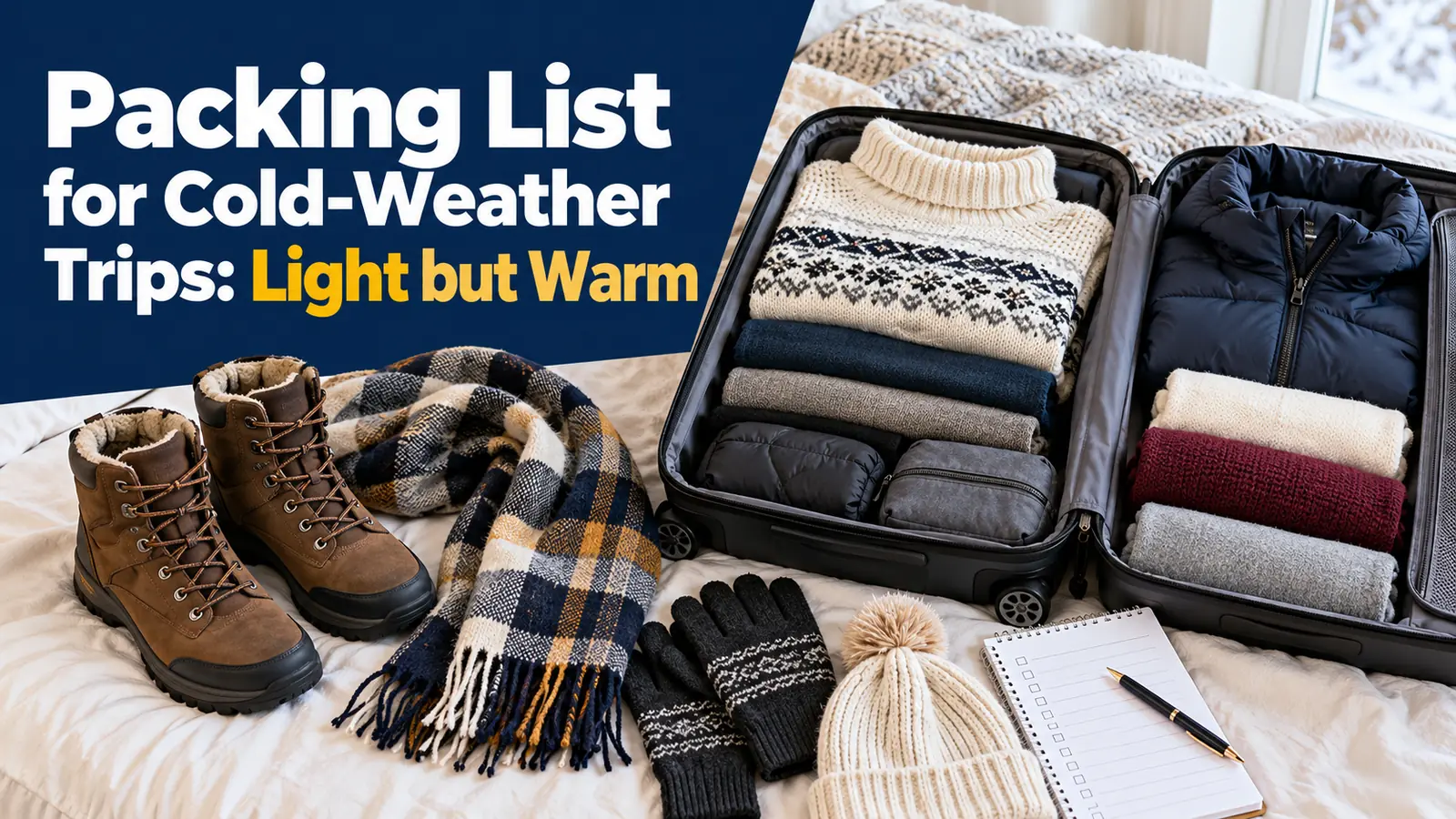
Packing List for Cold-Weather Trips: Light but Warm

Packing list for cold-weather trips that stays light but warm: the three-layer system, fabrics, boots, accessories and a checklist from Orvis and REI...

October 28, 2026 Updated November 4, 2026 6 min read
Packing List for Cold-Weather Trips: Light but Warm

Key takeaways

  • Both Orvis and REI use a three layer system: a wicking base, an insulating middle and a weather-blocking outer layer.
  • Merino wool has a strong warmth range, while synthetics are lighter, more breathable and dry fast, according to REI.
  • Synthetic insulation stays warm when wet, and polyester fleece is breathable and quick-drying.
  • Orvis suggests a wool hat covering ears and neck, waterproof gloves with liners and waterproof boots with traction.
  • Wear your bulkiest items on the plane, and keep a neutral color palette so items mix and match.

Orvis, the outdoor retailer, builds its cold-weather travel advice on one idea: three layers, made of a thin wicking base, an insulating middle and a lightweight outer shell. REI, in a layering guide first published on 17 February 2020 and modified on 16 November 2024, uses the same structure, which is why this system works for both a weekend in the hills and a week in the snow.

This cold weather packing list shows how to stay warm without overpacking. You will find the layers, the fabrics, the shoes and accessories, and a checklist for a carry-on. Both sources are retailers, so the product advice reflects their business, but the layering principles are widely used.

The Three Layer System

Layering beats one thick coat because you can add or remove pieces as the temperature and your activity change. REI describes the base layer as snug and moisture wicking, the mid layer as insulating, and the outer layer as the one that blocks wind, rain and snow.

LayerJobExamples
BaseWick sweat, sit close to skinThin merino, silk or performance fabric top and bottoms
MidTrap warmthFleece, wool sweater or light insulated jacket
OuterBlock wind, rain and snowLightweight waterproof or windproof shell

Fabrics: Merino, Synthetics and What to Avoid

REI says merino wool has a strong range of warmth, while synthetics are lighter, more breathable and dry quickly, although they resist odor less. It adds that polyester fleece is breathable and quick-drying, and that synthetic insulation stays warm even when wet. Orvis lists merino wool, silk and performance fabrics for the base.

FabricStrengthsTrade-off
Merino woolWarm across a wide rangeCosts more
SilkLight and thinDelicate
SyntheticLight, breathable, dries fastHolds odor more
Polyester fleeceBreathable, quick-dryingLess wind-proof on its own

The REI page does not discuss cotton. A separate Mayo Clinic cold-weather exercise guide advises against cotton next to skin, so skip cotton as your base layer.

Shoes, Socks and Accessories

Orvis recommends waterproof boots with traction, thin wool socks and laceless styles that are easier to take off at security. For your head and hands, it suggests a wool hat covering ears and neck, a wool scarf and waterproof gloves with liners. It also lists polarized sunglasses and sunscreen, because snow reflects light.

ItemWhy it earns its space
Waterproof boots with tractionKeep feet dry and steady
Thin wool socksWarm without bulk
Wool hat covering ears and neckHead and neck lose warmth fast
Waterproof gloves with linersDry hands, and liners can be worn alone
ScarfSeals the gap at the collar
Polarized sunglasses and sunscreenSnow glare is strong

The Light but Warm Packing List

Orvis suggests a neutral palette, merino or silk underwear, thermal bottoms and one versatile pair of jeans or corduroys. Choose pieces that mix and match so fewer items cover more days.

CategoryPack for a 5 day trip
Base layers2 tops and 1 or 2 bottoms
Mid layers1 fleece and 1 sweater
Outer1 shell or insulated jacket with pockets
Pants1 jeans or corduroys and 1 thermal bottom
Footwear1 pair waterproof boots; 1 spare pair
AccessoriesHat, scarf, gloves with liners, sunglasses
Small extrasLip balm, moisturizer, sunscreen, charger

The quantities are our suggestion for a short trip, not a retailer rule. Wash and re-wear base layers, and the list stays small.

Airport Tips: Wear the Bulk

Orvis says to wear your bulkiest items on the plane, which saves bag space and keeps you warm in a cold terminal. Outerwear with pockets lets you carry small items so you can clear security faster. If you are planning a longer trip, our guide to resort wear and vacation packing shows how to build a compact bag for warm destinations as well.


Related readThanksgiving Table Decor Ideas: Centerpieces and Place SettingsRead →

Free tools for Lifestyle

FAQs

What is the three layer system for cold weather?

Both Orvis and REI describe the same idea. A snug, moisture-wicking base layer sits against the skin, a mid layer insulates, and an outer layer blocks wind, rain and snow. You can add or remove layers as the temperature or your effort changes, which is why it works better than one heavy coat. Practise the system at home on a cold day, because you will quickly learn which combination feels right before you pay for extra bag space.

Is merino wool better than synthetic for cold weather?

Neither is better in every case. REI says merino has a strong warmth range, while synthetics are lighter, more breathable and dry quickly but resist odor less. Synthetic insulation also stays warm when wet. Choose merino for comfort across trips, and synthetics for sweaty activity or damp conditions. Think about your trip too, since a damp walking trip may suit synthetics, while a long city break with limited laundry may suit merino better.

What should I wear on my feet in cold weather?

Orvis suggests waterproof boots with traction and thin wool socks. Laceless boots are easier to remove at airport security. Choose a size that leaves room for socks without being tight, since a snug fit can restrict warmth. Pack a spare pair of socks in your carry-on in case of wet weather. Try boots at home with the socks you plan to wear, and break them in before the trip so that blisters do not spoil your first day.

How do I pack light for a cold-weather trip?

Choose a neutral color palette so pieces mix and match, wear your bulkiest items on the plane and pack thin layers instead of thick ones. Orvis suggests merino or silk underwear, thermal bottoms and one versatile pair of jeans or corduroys. Washing and re-wearing base layers keeps the bag small. Roll clothes tightly, use packing cubes if you have them, and wear the heaviest boots and jacket on travel day so the bag stays compact and light.

Should I avoid cotton in cold weather?

Mayo Clinic’s cold-weather exercise guidance advises against cotton against the skin, because it holds moisture. The REI page does not address cotton directly. A wicking base layer of merino, silk or a synthetic is a safer choice, especially if you plan to walk, hike or ski. If you are unsure, choose a wicking base layer and add a warm sweater over it, so that you are never stuck with damp fabric on your skin.

What accessories matter most in the cold?

Orvis lists a wool hat that covers the ears and neck, a wool scarf, waterproof gloves with liners, polarized sunglasses and sunscreen. Hands, head and neck are easy to cover and make a large comfort difference. Pack the accessories in a small pouch so you can reach them quickly. Keep a spare pair of gloves or liners in your jacket pocket, since small items are easy to lose in cold, busy airports and train stations.

Pack Layers, Not Luggage

A good cold-weather bag is not full of coats. It is a few thin, smart layers that you can combine in different ways for different days.

Lay everything out before you pack, remove one item from each pile and check that every piece works with at least two others. If it does, you are ready to travel light and stay warm.

Sources: Orvis: How to pack for cold weather travel; REI: Material science of layering; Mayo Clinic News Network: Exercise safety in cold weather

Was this guide helpful?
Jinal Mistry
Written by

Jinal Mistry

Jinal Mistry is the Founder of WritoryBuzz and an SEO & Digital Growth Specialist with 5+ years of experience in Technical SEO, AI SEO, International SEO, and organic growth strategy. She helps businesses improve search visibility through data-driven SEO, content optimization, search experience enhancement, and AI-focused search strategies.Having worked with clients across multiple industries and international markets, Jinal specializes in building sustainable organic growth through technical excellence, user-focused optimization, and future-ready digital marketing practices. Through WritoryBuzz, she shares insights on SEO, AI search, content strategy, digital marketing, and emerging search trends to help businesses and marketers stay ahead in the evolving digital landscape.

More from this author

More in Lifestyle

View all in Lifestyle →

Keep exploring

Have expertise to share? Write for WritoryBuzz.Read the guidelines and send us your pitch.
Become a contributor
Free tools

63 free tools for writers, SEOs and developers

Open one in your browser and start. Nothing to install, and your text stays on your device.

PrivateInstant resultsNo sign up
Write for us

Have expertise to share?

  • Original, well researched guides
  • Reviewed by our editors
  • 29 categories to publish in
Submit a guest post
© 2026 WritoryBuzz. All rights reserved.Back to top